
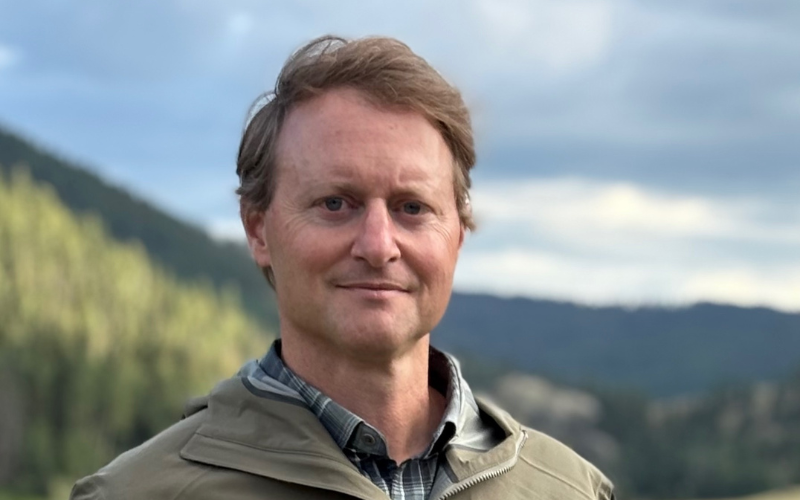
After 15 years at Outside, veteran editor Chris Keyes struck out on his own, founding Re:Public earlier this year with a clear mission: to fill the void left by a contracting media industry.
He recognized that while public lands are central to the outdoor experience, the nuanced policy battles and environmental threats facing them were often getting lost in the daily news cycle. By adopting a unique co-publishing model, Re:Public partners with established outlets to bring high-quality, narrative-driven journalism to a broad audience without the pressure of chasing clicks for a standalone site.
This year, Re:Public made waves with a feature series focused on national parks, co-published with Outside, which exposed morale issues among rangers and the real-world impacts of budget cuts in Yosemite, Great Smoky Mountains and Rocky Mountain.
In an interview with SESO, Keyes shared more about his transition from commercial media to nonprofit journalism, why he believes the outdoor industry needs to find its voice in public lands advocacy and what issues he is watching closely as we head into a pivotal election year.

Congratulations on the launch of Re:Public. How has it been going so far? Why did you feel this was the right time for a publication focused specifically on public lands?
Re:Public founder Chris Keyes: It’s been a total rollercoaster, but also a really rewarding and incredibly fun project. The founding idea really came last spring. I understood how much contraction there had been in the media industry. Knowing that with the current administration, there are so many huge issues for the media to cover, it was pretty obvious that there just wasn’t enough bandwidth among existing outlets to cover public lands.
As important as public lands are, they were sort of No. 17 on the list of huge things coming out of Washington. My 15 years at Outside taught me that public lands are a key part of the recreation that drives the industry forward. We saw a gap where we could step in and provide that necessary coverage.
Our model isn’t necessarily to build readership to Republic.land, particularly in year one and two. It is incredibly difficult in this media era to drive eyeballs to a new site; I would have to hire a dozen journalists to crank out content.
Instead, we are really a co-publishing model. We find a great story, and then we go and seek a publishing partner. For our first big batch of stories, we did a series of three feature stories in conjunction with Outside magazine. Before we had even launched our site, I was able to get those off the ground.
Those stories published in October focused on the national parks. How were they received?
Chris Keyes: They were very well received and, I thought, very well reported. One of them dealt with the morale issues among park rangers, which was an angle I hadn’t seen explored. Generally speaking, rangers are very reluctant to speak if they still have a job with the government. Our reporter did a nice job opening that up and getting some real stories from the ground.
You mentioned that public lands drive the outdoor economy. How do you think the industry is being impacted and how is it participating in public lands advocacy?
Chris Keyes: It’s really anecdotal, but I don’t think the industry is as vocal about the threats to public lands as they were during previous administrations. I suspect the combination of a president with a bully pulpit, plus the threat of tariffs, made a lot of CEOs and companies just say, “We’re just going to keep our heads down and not try to make anybody angry in Washington.”
My expectation is that threats to the lands where people recreate could be a galvanizing force and really codify for people why these places are so important to them.
I am a little surprised that the industry hasn’t had a bigger voice in this. If the outdoor industry can’t be vocal about this, who is the consumer they’re worried about pissing off? Ninety-nine percent of the consumers buying outdoor gear are passionate about public lands. It seems like a very obvious and non-controversial stance to take.
Looking ahead to 2026, what specific threats or issues are you keeping an eye on?
Chris Keyes: There are a couple of things I’m very curious about. One is that it’s an election year. Historically, environmental issues or public lands haven’t really affected the outcomes of elections. I think 2026 might be the first year you really see that change. You have members of the delegation from Utah, Montana and Idaho who are all up for re-election, and their stances on public lands are really going to come to the forefront.
I believe that voters, particularly out West, will have public lands issues top of mind when they go to the voting booth. Where a politician stands on public lands and privatization will really affect their performance.
The threats to public lands from this current administration are multiplied by several degrees versus the first time around with the Trump administration. And I should say: there are threats under any administration, Democrat or Republican. But the first Trump administration’s threats were largely around oil and gas expansion and shrinking national monuments. This time around, it’s been more about a full-bore policy of expanding energy dominance.
That has had a tremendous effect on public lands because you’re talking about places that previously had been considered really safe and off-limits that are suddenly being opened up for extraction. That is really concerning.
Despite the tough news cycle, you seem energized. How do you maintain hope for the future of public lands?
Chris Keyes: Doing this work has been incredibly cathartic. I’m more engaged on public lands issues than I’ve ever been in my lifetime. It’s been a huge learning curve for me regarding the policy side and how the sausage is made.
What really keeps me hopeful is the realization of how passionate people are about this issue. Talking about public lands and long-term stewardship reaches a much more bipartisan audience than other environmental topics, like climate change, which can sometimes turn off half your potential audience. I’m not in an echo chamber talking to the exact same audience all the time, and that is exciting.
This interview has been condensed and edited for publication. Kate Robertson can be reached at kate@shop-eat-surf-outdoor.com.


