
Between fluctuating tariffs, a consolidating retail environment and increasing economic pressure on consumers, established outdoor industry players and newcomers alike faced a stress test of their resilience. While major corporations navigated these waters with extensive supply chains and substantial capital, a different story unfolded for the industry’s smaller, more agile players.
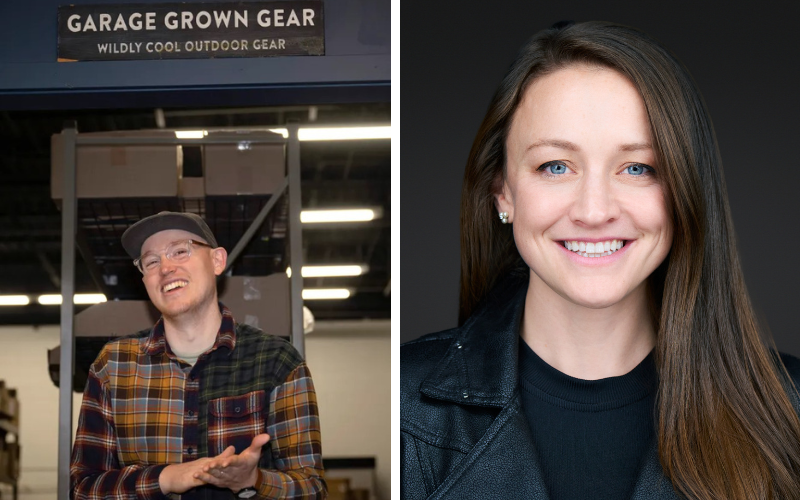
Emerging brands, often operating with leaner teams and tighter budgets, found themselves at a crossroads. For some, the economic uncertainty served as a catalyst for innovation and strategic pivoting. For others, it highlighted the fragility of global logistics. Yet, despite the headwinds, the pipeline of new entrants into the outdoor space has not slowed, according to Lloyd Vogel, co-founder of Garage Grown Gear, an online retailer specializing in ultralight and cottage industry equipment, and Emily Holland, director of brand partnerships and community at Founded Outdoors, an organization dedicated to supporting and educating emerging outdoor entrepreneurs.
Holland and Vogel shared more about how small brands navigated the turbulence of 2025 and what the industry can expect at the upcoming Outdoor Retailer show in August 2026, which is putting a special emphasis on emerging brands this year.
With tariffs and shifting consumer behavior dominating the headlines in 2025, how have emerging brands weathered the storm? Was the impact as severe as predicted?
Emily Holland, director of brand partnerships and community, Founded Outdoors: It has been mixed, but a common theme is brands trying to view the tariff situation and the political landscape as an opportunity. That is difficult to do when cash flow is tight, but the Founded Outdoors community has seemingly weathered the storm well given the hand they were dealt.

Many founders saw this coming last year and made plans to change manufacturing locations or partnerships ahead of the game. Others had to scramble. I will say, having managed this community for four years, this is the most challenged and burnt out I have experienced the founders. However, it is also the most I have seen them willing to help each other, collaborate and try new things.
Lloyd Vogel, co-founder of Garage Grown Gear: I would say yes and no regarding the severity. Big brands have big supply chains; small brands often run tighter operations. A lot of the brands we work with do not have massive manufacturing partners overseas. They might have difficulty sourcing specific components, but many are manufacturing in the U.S. using fabric that is already here.
We saw some rising tariffs when the China tariffs hit, but those (were) alleviated after a period. For us, the biggest impact wasn’t necessarily the direct cost of tariffs, but consumer sentiment. Customers were concerned about economic uncertainty, which impacted purchasing behavior more than the actual supply chain costs. We saw some price increases, generally around 5%, but few brands had existential issues solely due to tariffs.
Did this uncertainty discourage entrepreneurs from launching new businesses this year?
Lloyd Vogel: I don’t think entrepreneurs are always that prudent. I didn’t think about economic headwinds when I started my business. We still saw a significant number of new businesses launch this year. It has never been an “easy” environment to be a small business owner — if it isn’t tariffs, it’s something else. Entrepreneurs are often evolving to whatever environment they see.
Emily Holland: I am actually seeing a higher velocity of people entering the space. While many of our brands are in gear and apparel, we also see experience-based founders, such as guide services or hospitality. I think this is an opportunity for new brands to enter because they can start from scratch with the current reality in place. That might be a better starting point than an established brand having to switch their entire manufacturing process and supplier network.
Innovation is often cited as the advantage of the “little guy.” How are you seeing that play out in product development?
Emily Holland: While many people had to reduce overhead considerably, I think we might see a (higher) level of product innovation over the next few years as a result. Constraints force creativity. Founders had to get creative with manufacturing, perhaps moving to U.S. production or using materials that have different tariff requirements.
Small brands also do not have to go through the same R&D cycles as larger brands. They can innovate quickly. If they get feedback from 20 customers on a piece of gear, they can change it immediately. That speed is compelling to buyers who otherwise have to wait for a larger brand’s multi-year product cycle.
Lloyd Vogel: There is no lack of new and interesting products. I don’t think anyone is fundamentally redesigning what a backpack or a tent is right now — it is more about iterations and variations. For example, we saw a three-gram fuel transfer device come out this year that made a huge impact.
However, for small brands, success isn’t just about the product. It’s about finding the right partnerships. We often see brands trying to find any retailer, rather than the right retailer. Brands need to go deep and build roots with intentional partnerships rather than just trying to get on every shelf.
Emerging brands are set to have a significant presence at the upcoming Outdoor Retailer show in Minneapolis. What are you most anticipating regarding the show’s new format?
Lloyd Vogel: We have a 3,000-square-foot space smack dab in the middle of the floor that will house up to 100 small brands. Ten years ago, the show would not have rolled out that type of red carpet for small businesses. The fact that they are prioritizing this is a testament to a commitment to discoverability.
This format lowers the risk and raises the reward for buyers. It creates a village for small brands to connect with buyers who are looking to differentiate their assortment from Amazon or general big-box competitors.
Emily Holland: I am excited that we are placed in the middle of the floor; that is unheard of in recent trade show history. We are also gathering the day before for the Ascent Summit to provide value and community for founders.
Having such a coalition of small brands in one space means no one will be able to ignore them. From a buyer perspective, there has always been interest, but often these brands were physically located in the back corners of the show. Now, with activations and a central location, the rest of the industry can see that these businesses are the backbone of innovation.
Lloyd Vogel: Also, the location in Minneapolis is a hub of outdoor recreation, from paddling to skiing. It is a vibrant outdoor culture, and I think the local community is going to get behind the event in a way that will be refreshing for the industry.
As we move toward 2026, what do these businesses need most to sustain their growth?
Emily Holland: First, different financing options. Many founders think venture capital is the only way forward, but they need education on grants, crowdfunding, and local bank loans.
Second is sales representation. It is still a challenge for small brands to find sales reps who will take them on because their volume is low. We are seeing some new models pop up, like retainer-based agreements versus pure commission, which is a positive shift.
Finally, discoverability. The internet feels crowded right now. Founders are having trouble with organic SEO, especially with AI scrubbing data differently. The things that worked before aren’t working as well, so developing relationships with media and influencers organically is becoming critical.
Kate Robertson can be reached at kate@shop-eat-surf-outdoor.com.


