
Key Takeaways:
- Outdoor participation hit a record 183.2 million people in 2025, but growth slowed to 1.1% and outings per participant dropped to 65.2 from 87 in 2012.
- Camping is the strongest on ramp in the category, with more than 9 in 10 campers also hiking, fishing, paddling or biking.
- Older adults, kids and multi activity core customers are where retailers have the clearest opening to grow basket size.
The Oudoor Industry Association 2026 Outdoor Participation Trends Report has landed with a big swath of data on how many people are getting outdoors, who’s getting outdoors and how often. The numbers themselves are only half the story. The more useful read for retailers is what’s behind them: who the new outdoor consumer actually is, where they’re pulling back and what that means for what’s on the shelf.
The big headline is that participation in outdoor activities in the U.S. continues to grow. From 2024 to 2025, 2.1 million people became new outdoor activity participants, hitting a record 183.2 million participants overall in 2025. That milestone reflects a steady uptick for the past six years. Since 2019, 30 million people have become regular participants in outdoor activities, totalling nearly 60% of Americans ages six and older.
“That percentage beats booze,” said Kelly Davis, Research Director, Outdoor Industry Association, which has issued a participation report annually for more than 15 years. “Gallup reported booze at 54% participation nationwide.”

More than half of today’s outdoor participants have less than 10 years of outdoor experience, according to the report, underscoring just how new a share of this customer base still is.
Growth Continues, But the Pace Is Slowing
OIA’s 2026 report found that, as overall participation continues to grow, the rate of growth slowed slightly, just 1.1% from 2024 to 2025, since the post COVID boom. For Davis, the slowdown doesn’t yet signify a trend.
Instead, she said, growth is still in play. The more important factor to consider is how the industry responds to the influx of new participants.
“It’s really time to engage the entire community as it exists now, the 183.2 million, and learn how the dynamics have shifted,” Davis said. “Because 30 million new kids came into the playground in the past six years. If you were 50 kids in a playground, you were all used to your traditions and the way you play games. And then 30 new kids just came into the gate, and they don’t know your games, your tradition, and frankly, they just don’t care. They went on a hike with their friend and loved it. The good news is that the people that came into the market, we’re keeping.”
Diversity and Demographics Are Shifting
Another key finding in the 2026 report is how participation is shifting by demographics, including age, race, gender and even geography. Participation among Blacks grew by 1.5% and among Hispanics it grew by 6.5%.
Despite those figures, racial diversity in the outdoors is still lagging, Davis said. Diversity among age groups in the outdoors, however, is notable. In terms of participation by age, the number of kids ages 6 to 12 grew by 5%, reaching 22.6 million participants in 2025, about 66% of adults with children participate in outdoor recreation compared with 52.5% of adults without children, and participation among people older than 64 grew by 3.6%.
The report also found record participation rates by gender, with women reaching 53.4% and men reaching 64.8%. Households earning more than $100,000 annually grew participation by 3.2%, and participants living in New England and the East South Central region grew by 6.2%, among the strongest regional gains in the report.
Older Shoppers Have More Money and More Time
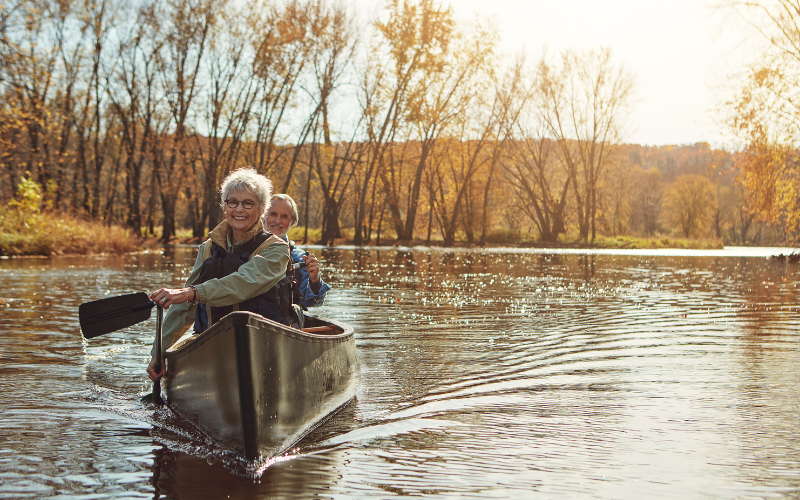
The report puts numbers behind that momentum: 23.9 million Americans age 65 and older participated in outdoor activities in 2025, 12.1 million more than a decade ago, with the participation rate for that age group climbing from 25.7% in 2016 to 41.6% in 2025. Hiking, wildlife viewing, birding and fishing are the activities benefiting most from that growth.
“The thing I love about that demographic that I’m part of is we’ve got more wealth and more time than any other age cohort,” Davis said. “And you can see the impact that that age cohort has on the young children. It all goes together. They’re going camping, hiking, fishing, birding.
“If I were a retailer, I would have a birding kit ready to go. I’d give you tick protection, long pants, binoculars. Maybe some trekking poles. Go find that owl.”
Young Adults Are Priced Out
There were just two age groups for which participation in outdoor recreation didn’t grow: according to the report, the number of participants ages 18 to 25 fell 1.3% to 15.2 million, and the number of participants ages 25 to 34 declined 2.8%, to 19.1 million.
To Davis, the declines in those cohorts reflect economic conditions, and correlate with a drop last year in frequency of outdoor participation.
“It’s a long term trend, I will tell you that right away. In about 2012 we had 140 million participants overall. The average number of outings per participant was 87. We’re now at 65.2 outings per participant, so it’s gone down pretty considerably,” Davis said.
“I see economic strain, the prices of housing, transportation, insurance, and food going up substantially, to a point that a lot of people can’t afford all of those recreational things. If you’re talking about buying a whole new camping setup, or starting something like snow sports, that’s going to eat into your budget for things like food.”
Frequency Is Down, But Engagement Is Broader
The good news is that hiking, one of the five gateway activities that are most popular, is still the leader in participation. And hiking, Davis noted, doesn’t require much gear. All you need are shoes and, she added, maybe a bra.
The other positive nuance is that existing outdoor participants are spending time across a wider array of activities. Someone who might have focused exclusively on trail running in 2013 is now someone who has expanded into road running, biking, or fishing. They may not be running trails as frequently, but they’re participating in a wider array of activities. The so-called core may look different in terms of frequency of participation, but they’re still there and as engaged as ever.
“If you go outside once a year, you’re probably not going to become a conservation advocate,” Kent Ebersole, President of Outdoor Industry Association, said in a statement. “But when people get outside five, 10, or 20 times a year, they begin building a deeper connection to public lands, conservation, and the outdoor community. Frequency and repetition matter.”
Camping Remains the Best On Ramp
For the newer outdoors fans, camping is perhaps the most important activity in terms of sheer participation and breadth of activities. Among those who camp, more than 9 in 10 also participate in other pursuits like fishing, hiking, paddling, and biking. Camping, in other words, is the ultimate on ramp for ongoing outdoor recreation.
“If we can get someone to spend one good night outdoors, we keep them,” Davis said. “They’ll come back.”


