
Key Takeaways:
- Hannah Wall, Trend Expert at online wholesale platform Faire, says shoppers are buying outdoor products as everyday fashion and lifestyle statements, not only for outdoor use.
- Wall says golf destinations and small travel towns are among the strongest growth markets for independent retailers.
- Wall explains how brands on Faire are keeping pace with rising interest in women’s golf.
Faire, an online wholesale platform where independent retailers buy products from brands, released its inaugural Independent Retail Report recently. The report draws on a global panel of independent retailers and a decade of wholesale relationships on the platform. Faire says it has facilitated more than 10 million new connections between brands and retailers.
Among the findings: independent retailers with physical stores are outgrowing online-only ones, small towns are outpacing major cities, and independents are stocking new products before trends hit the mainstream.
In the U.S., that growth is following population shifts into Sun Belt cities such as Augusta, Ga., and Norman, Okla., along with Gen Z’s preference for in-person shopping and a rise in travel to small historic destinations. The pattern held internationally, with market towns Hereford and Lyme Regis topping all 58 U.K. cities measured.

Tariffs pushed U.S. retailers further toward domestic brands, but standout imports still grew, including Italian leather accessories, up 571%, and Moroccan woven bags, up 214%.
Faire also shared first-party data with SESO pointing to growth in several outdoor-related categories.
In golf, searches for women’s-specific golf terms rose nearly 37% from May 2025 to May 2026. That tracks with National Golf Foundation data showing a 45% rise in on-course female golfers from 2020 to 2025, lifting women’s share of on-course golfers to a record 28%.
Outdoor apparel is also crossing over into fashion. Searches for windbreakers are up 320% year over year, with demand rising for leopard print, checkered, pullover, and custom styles. Faire says that signals shoppers are buying the category as outerwear fashion first and for function second.
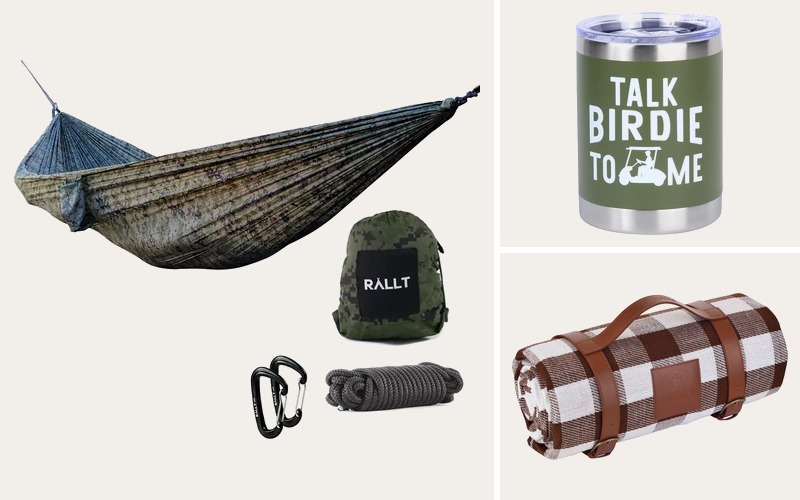
In camping, searches are up for hammocks by 125%, camping chairs by 75% and insulated cooler bags by nearly 69% year over year. Faire points to a broader “basecamp essentials” trend as more Americans choose staycations and outdoor getaways over traditional travel.
SESO followed up with Faire Trend Expert Hannah Wall to dig deeper into golf, regional growth and how independent retailers are responding. The full report is available on Faire’s site.

Faire Trend Expert Hannah Wall. Photo courtesy of Faire.
Your data shows “golf dress” searches up 101%. Are independent retailers able to keep pace with that demand, or is there a supply gap? Which brands or categories within women’s golf apparel are seeing the fastest reorder rates on Faire?
Hannah Wall, Trend Expert, Faire: Brands on Faire are nimble enough to flex with demand, and independent retailers are finding that supply, especially from brands that can restock reliably as interest grows. Reorder rates for several women’s golf-adjacent apparel brands are outpacing category norms.
Which specific regions or metro areas is Faire seeing outperform, and is that growth concentrated in outdoor-adjacent retail specifically, or across all independent categories in those areas?
Hannah Wall: We’re seeing outperformance in Sun Belt towns like golf destinations Augusta, Ga. (home of the Masters Tournament, with retailer spend up 62% YoY) and Southern Pines, N.C. (in the Pinehurst golf corridor, up 70%). We also saw growth in classic small-town travel destinations: Sturgeon Bay, Wis. (Door County, up 80%), Sevierville, Tenn. (in the Smoky Mountain area gateway, up 50%), Bozeman, Mont. (Yellowstone gateway, up 40%), and Rhinebeck, N.Y. (Hudson Valley, up 44%).
On category, the growth is broad-based, not limited to outdoor. Foot traffic lifts all local retail — gift, home, apparel, food and beverage — but outdoor and travel enthusiasm is clearly a driver. It tracks with wider travel industry trends, including an increase in domestic tourism, so the effect touches nearly every category.
With big-box closing roughly 8,300 stores last year while independent, multi-channel retailers grow 2.2x faster than online-only sellers, what’s Faire seeing as the actual mechanism behind that?
Hannah Wall: It really comes down to independents’ agility. When big-box chains close, they leave real gaps in communities and independent retailers can move fast enough to fill them, offering the discovery and curation big chains never could.
That agility is backed by proximity: independents stay close to their customers, (and are) built on local taste, personal curation, and community trust. That closeness lets them read and respond to what a neighborhood actually wants and it’s paying off now as people seek more in-person experiences and increasingly treat shopping as part of their social life.
Given these signals, what’s Faire’s read on how independent outdoor retailers should be adjusting buys for the next two quarters, holiday season and into 2027?
Hannah Wall: The data points to one clear throughline: consumers aren’t just buying outdoor products for outdoor use; they’re buying them as everyday fashion and lifestyle statements. The retailers winning right now are the ones treating “outdoor” as a fashion and lifestyle category, not a niche performance category.


