
Key Takeaways:
- The North Face grew 6% as reported, or 4% in constant currency, outpacing VF’s own guidance for a flat quarter.
- Vans declined 8% as reported, or 9% in constant currency, as continued Americas DTC growth was more than offset by wholesale declines.
- VF topped its own first-quarter guidance and raised its full-year fiscal 2027 revenue outlook to growth of 2% or better in constant currency.
VF Corporation delivered first-quarter fiscal 2027 results ahead of its own guidance and raised its full-year revenue outlook, the company announced today. The parent of Vans, The North Face and Timberland reported revenue of about $1.7 billion for the quarter ended June 27, down 5% versus last year in reported currency. Excluding the divested Dickies business, revenue was up 1% as reported, or essentially flat in constant currency, ahead of guidance that had called for a decline in the low single digits.
Adjusted operating loss excluding Dickies came in at $95 million, slightly better than the $100 million loss the company had guided to. Adjusted gross margin was 54.9%, up slightly from a year ago. Net debt fell $1.1 billion, or 20%, compared with last year.
Alongside the results, VF announced a leadership change. Paul Vogel is stepping down as Chief Financial Officer, and Abhishek Dalmia, previously Chief Operating Officer, is taking on the combined role of Chief Financial Officer and Chief Operating Officer.

“We had a solid start to the year,” Bracken Darrell, President and CEO, said in a statement, adding that VF beat its revenue and operating income guidance. He added that The North Face, Timberland and Altra delivered another quarter of growth, and that Vans Americas DTC continued to grow but was more than offset by declines in global wholesale.
He said the company expects Vans’ wholesale to improve significantly in the second half of the year.
The North Face Outpaces Expectations
The North Face grew 6% as reported, or 4% in constant currency, in the quarter, ahead of the flat quarter VF had originally guided to. Darrell told analysts the brand’s outperformance was tied to timing, with orders that would normally ship in the first quarter instead shipping late in fiscal 2026, which made for a stronger fourth quarter and a lighter first quarter comparison.
Growth was led by the Americas region and the DTC channel, with product strength in transitional outerwear, shells and equipment. In footwear, the Altamesa v2 launched during the quarter and performed well out of the gate in every region the brand sells.
Looking ahead, VF said it expects The North Face to be flat to slightly up in the second quarter on wholesale timing, but roughly in line with last year’s growth rate for the full year. The brand will serve as the exclusive performance apparel sponsor for the U.S. Ski and Snowboard team through 2034, with the first apparel drop arriving this winter, and the company also teased an update to its Nuptse jacket line and unspecified marketing activity tied to IMAX theaters.
Vans Sees DTC Strength, Continued Weakness in Wholesale
Vans’ revenue declined 8% as reported, or 9% in constant currency, in the quarter, with the brand’s Americas DTC business continuing to grow while global wholesale declines more than offset that gain. Company executives said the pattern matches what they had signaled previously: a turnaround that starts in DTC before moving to wholesale.
Executives pointed to improving trends within DTC. In the United States, where about half of the brand’s business is concentrated, ecommerce is seeing accelerated growth and nearly 60% of comparable stores are now flat to growing. Darrell cited momentum in reinvigorated icons including Authentic, which posted another double-digit quarter, along with Slip-Ons and Old Skool, the latter benefiting from Pearlized and distressed treatments and collaborations such as one with Travis Barker. A limited release called the Souvenir Asphalt collection reportedly sold out in thirty minutes.
Darrell also pointed to cultural momentum for the brand, citing coverage describing Vans as a contender for footwear brand of the year and noting interest from luxury labels including Louis Vuitton, Prada, Dior and Miu Miu. The Vans Warped Tour, in its second year back, is expected to draw close to 600,000 attendees across six venues.
VF expects Vans wholesale to improve meaningfully in the back half of the year as retail partners bring in newer product ahead of the holiday and spring seasons. The company guided to a first half decline of about 9% for Vans, improving to a decline of 2% or better in the second half, which would put the brand down mid-single digits for the full year.
Timberland
Timberland grew 4% in the quarter, or 3% in constant currency, with growth in both DTC and wholesale globally and particularly strong Americas performance, with sales up 10%. The 6-inch premium boot remained the brand’s primary growth driver, alongside continued strength in the boat shoe. VF said Timberland’s growth was held back by roughly three points of impact from the ongoing conflict in the Middle East and work with one of its distributors.
Altra
Altra, VF’s smaller running brand, continued to build on last year’s performance, with Darrell reiterating the company’s belief that it can become a $1 billion-plus brand over time. Executives noted that road running has now become a larger business for Altra than trail running, in a market Darrell described as roughly ten times the size of trail running.
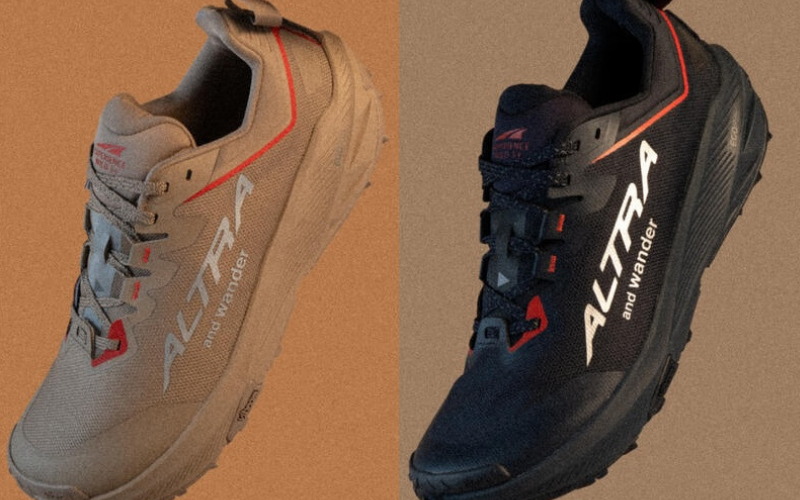
Photo courtesy of Altra.
Full-Year Outlook
VF raised its full-year fiscal 2027 revenue guidance to growth of 2% or better in constant currency, up from its prior guidance range of 1% to 2% in constant currency.
The company continues to expect adjusted operating margin of approximately 8%, free cash flow flat to up versus last year, and a year-end leverage ratio between 2.6 and 2.9 times adjusted EBITDA. VF reaffirmed its medium-term targets of an operating margin exit run rate of at least 10% in fiscal 2028 and a leverage ratio of 2.5 times or better by fiscal 2028.
VF’s Board of Directors also declared a quarterly dividend of $0.09 per share, payable September 17 to shareholders of record as of September 10.


