
Key Takeaways:
- Panelists agreed specialty retail’s deepest advantage is customer intimacy, but its clearest weakness is scale against big-box and direct-to-consumer channels.
- Black Diamond Equipment President Neil Fiske said the brand has cut its annual markdown events from six or seven down to two and pulled core products like Camalots out of discount programs entirely after retailer feedback.
- All four panelists pointed to brand direct-to-consumer discounting as the fastest way to break retailer trust, even as they floated rev-share and shared-data models to repair it.
Dana Caraway, owner of independent sales agency Caraway and Co. and a 20-plus-year veteran of West Coast outdoor sales, has sat through the same sales meeting more times than she can count. The brand promises to hold the line on price. Specialty is the priority this season, they say. Then she goes home.
“I look, and the brand side is on sale,” she said. “I start getting the phone calls from my stores. You’re on sale. What’s happening?”
The fallout does not stop at those phone calls. Caraway said the discounting also costs her sales she would have otherwise closed herself as a rep, as business shifts from her stores to the brand’s own site.

Caraway shared that experience during Outdoor Retailer’s Industry Day, an afternoon of education programming that ran ahead of the expo floor’s opening.
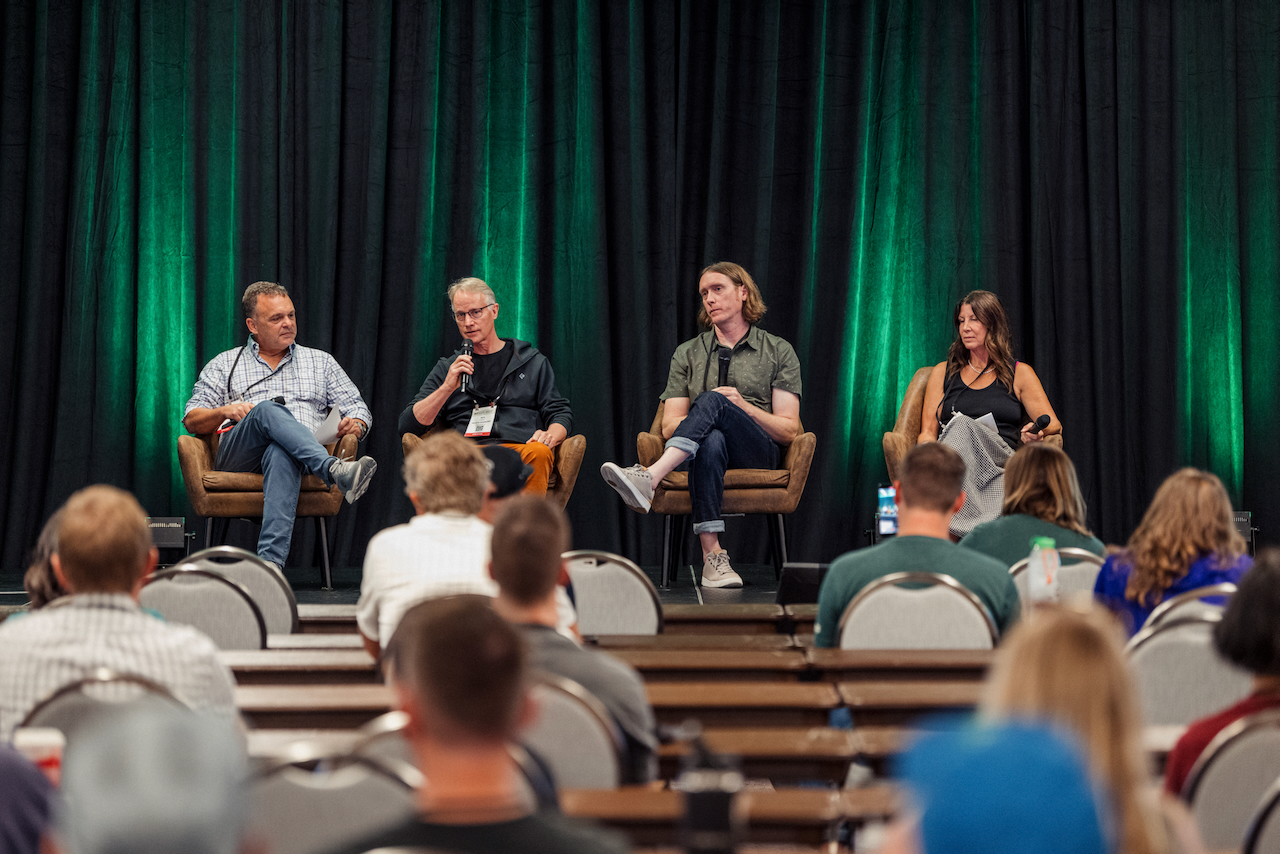
The panel, titled “The Big Debate: Is the Independent Shop the Future of the Outdoor Industry?” was part of a full day of education Wednesday at the newly reimagined Outdoor Retailer in Minneapolis, which packed a Retailer Playbook Lab, the Ascent Summit for emerging brand founders, and four Industry Day sessions into a single day ahead of the expo floor opening.
Locally.com CEO and founder Mike Massey moderated this session, joined by Neil Fiske of Black Diamond Equipment, Brendan Madigan of Alpenglow Sports and Broken Arrow Skyrace and Trail Running Company, and Caraway.
Direct-to-Consumer Discounting Broke the Trust
That kind of moment, Caraway said, is what breaks the trust brands spend entire sales meetings building.
Fiske responded from the brand side. Black Diamond has cut its annual markdown windows from six or seven down to two, Memorial Day and Black Friday, and pulled its Camalot cams out of discount programs entirely after retailer feedback that the practice was pulling sales forward at a lower margin for everyone.
“We’re just constantly trying to reshape the level of discounting, not swing the pendulum, but just keep chipping away at it,” he said.
Madigan’s read on the broader landscape was blunter still.
“The ecosystem is broken,” he said. “That’s a generality, it doesn’t apply to every brand, but I think if you spoke to retailers transparently, you would hear that.”
What Specialty Still Does Better Than Anyone
In Fiske’s view, specialty retail’s advantage over every other channel is not price or convenience. It is knowledge.
“You all who are specialty retailers, you know more about your customer than the brands know, than big box retailers will know, and I think ultimately that is the source of competitive advantage,” he said.
He described hitting the road after joining Black Diamond three and a half years ago, visiting as many specialty shops as he could, because that relationship was, in his words, the source of truth the brand needed to get regrounded.
Caraway framed the same idea from the sales floor.
“Specialty is good at creating an experience,” she said, pointing to the way a customer’s trip into a shop becomes a story they carry back to their community.
Madigan agreed, describing specialty as a launchpad that helps new brands break through.
“I think specialty, in my mind, should be treated as a marketing channel for brands,” he said, name-checking Black Diamond’s own early years as an example.
He added one caveat: “The important thing for brands to remember is once they blow up, to not forget who brought them to the dance.”
The Scale Problem Nobody Can Solve Alone
Massey then moved the conversation to specialty’s weaknesses. Fiske pointed to scale.
“The single biggest competitive disadvantage specialty has is scale,” he said. “You’re a series of small shops.”
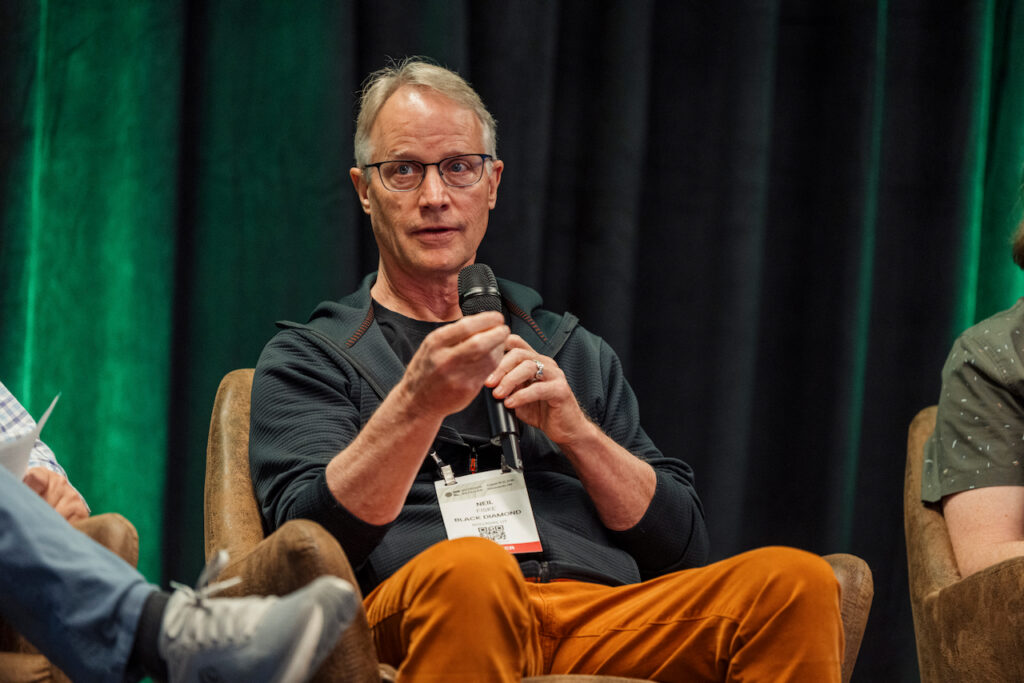
Black Diamond Equipment President Neil Fiske. Photo by Tim Aukshunas, courtesy of Outdoor Retailer.
His proposed fix was not more inventory or bigger stores, but connective tissue between shops that already exist, pointing to point-of-sale data platforms like ActionWatch in the surf industry as proof that independents can pool information without giving up what makes them independent.
Caraway’s answer to the same question was less about strategy and more about hours in the day.
“How do you have the time to be on the floor, manage your staff, do events, and digital marketing?” she asked. “When is there time to do that?”
Madigan had already named the industry’s rawest weak spot earlier in the panel.
“I am really bad at profitability,” he said.
What Disappears if Specialty Does
Asked directly what would change if a brand’s specialty channel dried up, Caraway pointed to community.
“It’s the specialty stores that create that community,” she said. “We want to connect. We want to get out there.”
Fiske tied the same idea back to product development, arguing that specialty is where consumer insight actually originates.
“If you take away that source of ideas and consumer intimacy, innovation dries up,” he said.
He added that specialty shops also carry the harder-to-measure job of mentoring newcomers into the sport at a moment when fewer people are finding it any other way.
Where the Panel Landed
Nobody on stage offered a tidy fix, but each panelist left with a version of the same idea. Specialty survives by leaning into partnership rather than competing against it.
Fiske laid out three partnership tracks he sees as the path forward. Retailers pooling data and resources with each other. Brands and retailers building deeper-tiered relationships beyond standard wholesale accounts. And specialty shops continuing to serve as community hubs for guides, educators and advocacy groups.
Caraway closed with a simple ask directed at retailers in the room.
“Rely on your reps,” she said. “Ask us to go back. Ask us to push. That’s what we’re here for.”
Outdoor Retailer’s main expo floor opens today in Minneapolis.
SESO will have more coverage to come, including additional dispatches from Industry Day’s education sessions and from the show floor.


