

Thor Tingey, co-founder and CEO of Alpacka Raft, was in college when he took his first packrafting trip across 160 miles of the remote and glacer-covered Alaska Range. Two years later, in 2000, he set out again – this time for a 600-mile journey in northern Alaska. By the time he was back, he knew he needed a better vessel, one that could stand up to Alaskan conditions.
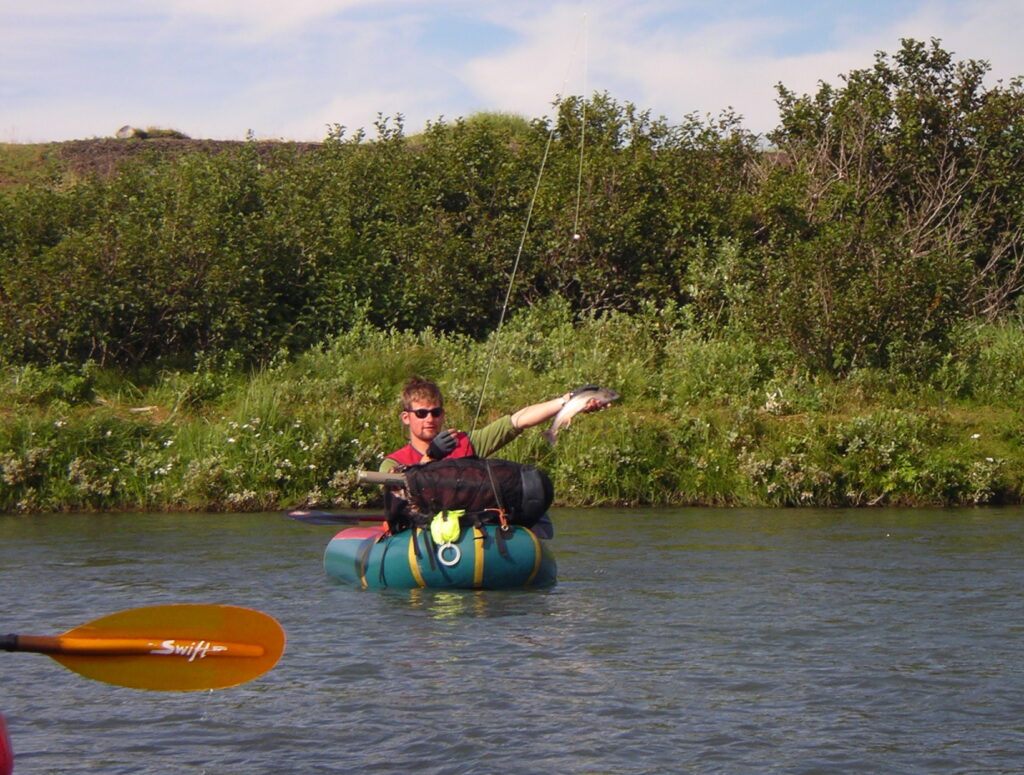
Co-founder and CEO of Alpacka Raft Thor Tingey in 2003. Courtesy of Alpacka Raft.
That’s where his mother, Sheri Tingey, sprang into action. The elder Tingey was already a master designer and producer of custom outdoor apparel; before having children she had created Design by Sheri, a custom ski and outdoor apparel company in Jackson Hole, Wyoming.
So when Thor came looking for a better boat, Sheri got to work designing her own.
The Reinvention of the Packraft
She made her first prototype with a heavy nylon fabric that had urethane coating on one side, 12-inch tubes, and an upturned bow. It was more durable than other lightweight boats, and made for treks. From there, she continued to iterate with feedback from Thor, and soon her company, Alpacka, was born.

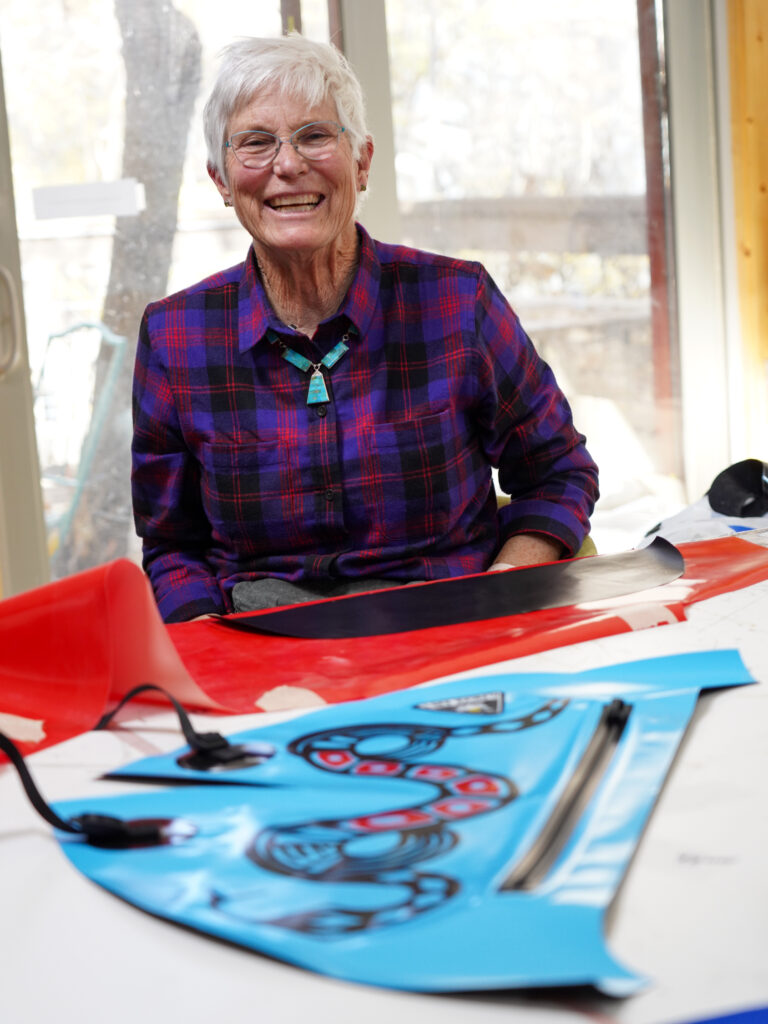
Sheri Tingey. Courtesy of Alpacka Raft.
It was among the first of its kind, and continues to be a standout in the outdoor industry for its longevity, family ownership, and unique origin story. While Alpacka helped create the modern packraft category, Thor underscored that the company didn’t invent it.
“The sport (of packrafting) predates Alpacka by generations,” said Tingey. “But when we started, it was a fringe sport where people were repurposing survival boats or boats built for mountain lakes and trying to make them work in Alaska rivers.
“We were the first company to come out there and say we should make a boat that really works for Alaska, where packrafting is still probably the most important and the most practical.”
For the uninitiated, packrafts are similar to inflatable kayaks, but they can carry gear for longer trips and, crucially, can pack up into backpacks for hikes across, say, ice floes or glaciers. While people have used versions of portable boats for generations, as Tingey said, it was adventurer Roman Dial who helped bring lightweight rafts into modern outdoor use.
As Tingey told it, Dial saw someone use a portable watercraft to cross a river during a wilderness race, and for the next decade began using versions of what he’d seen. Still, there was nothing purpose-built on the market that could do what Dial, and then Tingey, wanted.
“There was this company called Sherpa, which made snowshoes,” said Tingey. “They made a packraft every few years and it was pretty delicate. You could use it in Alaska, but it would rip if you hit the wrong rock or stick.”
So as Sheri continued to evolve her designs, Alpacka continued to grow, and so too did a new market category in rafting. That category continues to be small but is growing steadily. According to a 2026 industry report, by 2034 packrafting is expected to be worth $210 million globally – with Alpacka at the front of (ahem) the pack.
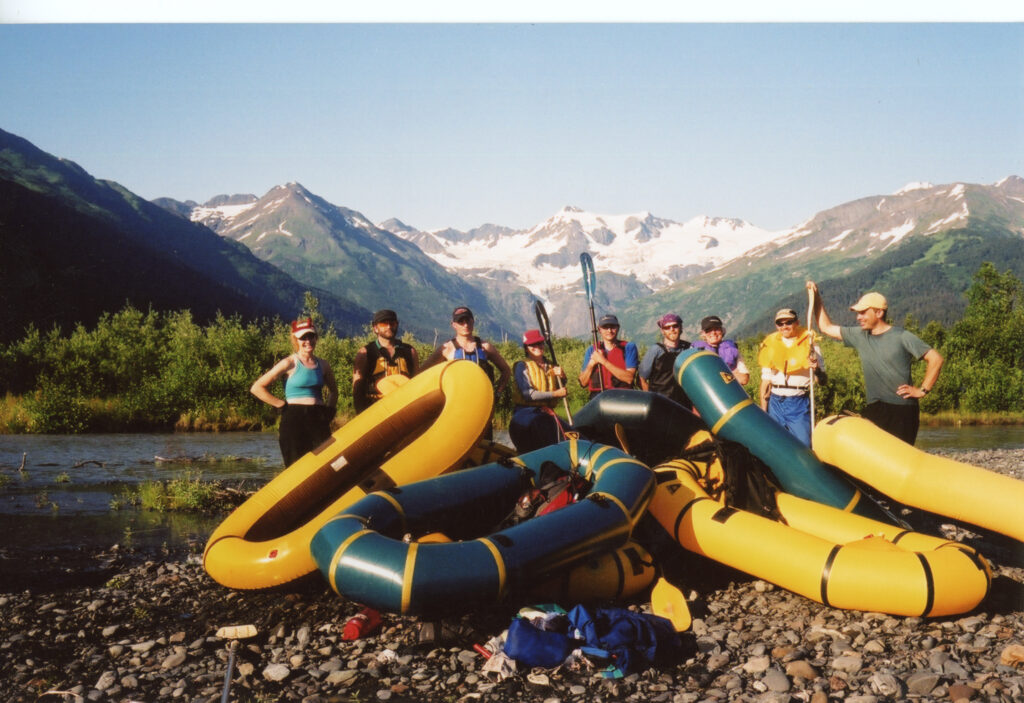
The early days of Alpacka Raft. Courtesy of Alpacka Raft.
From Legal Associate to CEO
For Sheri Tingey, creating and running Alpacka was a natural extension of her love of kayaking and her meticulous design and sewing skills. For Thor, the path to leading Alpacka was less direct. He started college with medical school in mind, but ultimately earned his degree in biology and, after college, helped collect data for the Alaskan fisheries.
Over time, though, Tingey began to want to impact environmental resources not just from the ground (or water) level, but from further upstream. He enrolled in law school at Lewis & Clark College, which has programs in environmental policy and natural resources, and at first worked in land use. But soon the 2008 recession hit, and he found himself in a new arena: debtor-creditor work in law, which, he noted, he knew nothing about.
In a twist, that work in a part of law he never anticipated turned out to be perfect preparation for the next phase of life: joining the family business. In 2016, a confluence of factors – including a desire to leave the city, and Sheri’s readiness, at age 70, to step away from day-to-day management – led Thor and his wife to Southeastern Colorado, where Alpacka is based. Sheri passed the packrafting torch to Thor, who became CEO, and continues to work with design.
In the decade since, said Thor, his early bankruptcy work has been deeply informative at Alpacka.
The work, he said, “helped me run a business more than anything because I spent seven years dealing with failed businesses. It’s really helpful when you run something to know how other people have failed.”
Business Basics
Some of those lessons have directly informed Tingey’s business-basics approach to running Alpacka. One of the pitfalls for startups, he said, is the pressure to grow fast, get acquired, and cash out. In those cases, it can be easy to “get out over your skis.”
Alpacka, in contrast, is in a niche field where market share is the name of the game. Even this year, which has been challenging for snow and river sports amid a low-snow season, Tingey projects that Alpacka will earn three times more revenue than it did in 2016, his first year at the company.
Part of that success, he said, is because of Alpacka’s care with cash flow and debt.
“I would love nothing more than to have a brand-new, state-of-the-art, 50,000-square-foot factory where we could do amazing things,” he said. But, he added, it would probably take $10 million to build. And the debt service? Probably more than $1 million annually.
“If you make mistakes in where you think the business is going to go, and you take on debt obligations, it doesn’t matter how much revenue you have. So we’ve been really cautious in terms of being protective of our cash, not growing too fast, not making these big leaps.”
Staying Focused
Tingey and his mother never worked together, per se, at Alpacka. By the time Sheri was ready to hand over the proverbial paddle, Thor had had more than 10 years of his own experiences personally and professionally, which gave him time to gain maturity and confidence.
Still, Alpacka’s matriarch has had a distinct impact on her son’s leadership. Over the 15 years that Sheri led the company, she stayed laser-focused on her strong suits and outsourced the rest. That philosophy, combined with lessons from Thor’s days in bankruptcy law, has helped shape his approach as CEO.
“The most important thing is being really good at one thing and being passionate about that thing,” said Tingey.
“My mom is not good at business finance, she is not good at people management. She is not good at marketing. She’s not good at any of those things that we say are key parts of a successful business.
“But she’s brilliant at product design and engineering. Brilliant at it. I think if she had spent her time being like, ‘I’m going to go take this class on marketing and try to make our Instagram go bigger,’ or whatever it might have been, I don’t think that would have been successful for her. She was successful because she stayed true to what she knew she was really, really good at.”
For Tingey, carrying that focus forward is a key thread throughout his own work, and the company’s pursuits.
“People will email us and say, ‘Can you make a paddleboard?’ And I’m like, ‘I don’t know anything about stand-up paddleboards,’” he said.
“I’m not saying that we couldn’t. But it would put a lot of my attention that way. I keep my attention focused exclusively on what I know we’re the best at.”


