

Big Agnes founder Bill Gamber launched the Colorado-based outdoor brand 25 years ago with a simple goal: to make better camping gear. Since its founding, Big Agnes has grown into an international business with approximately 70 employees globally, most of whom are in Steamboat Springs. In a conversation with SESO, Gamber discussed the company’s origins, shifting consumer expectations, the challenges of the post-COVID economy, and what lies ahead.
What was the original mission when you founded Big Agnes, and has it changed?
Big Agnes Founder Bill Gamber: The mission hasn’t changed; we just continue to want to make the best camping gear possible. The assortment has surely broadened. We first started with a sleeping bag pad to make a more comfortable system, and then we got into tents. From there it was just sort of all things camping.
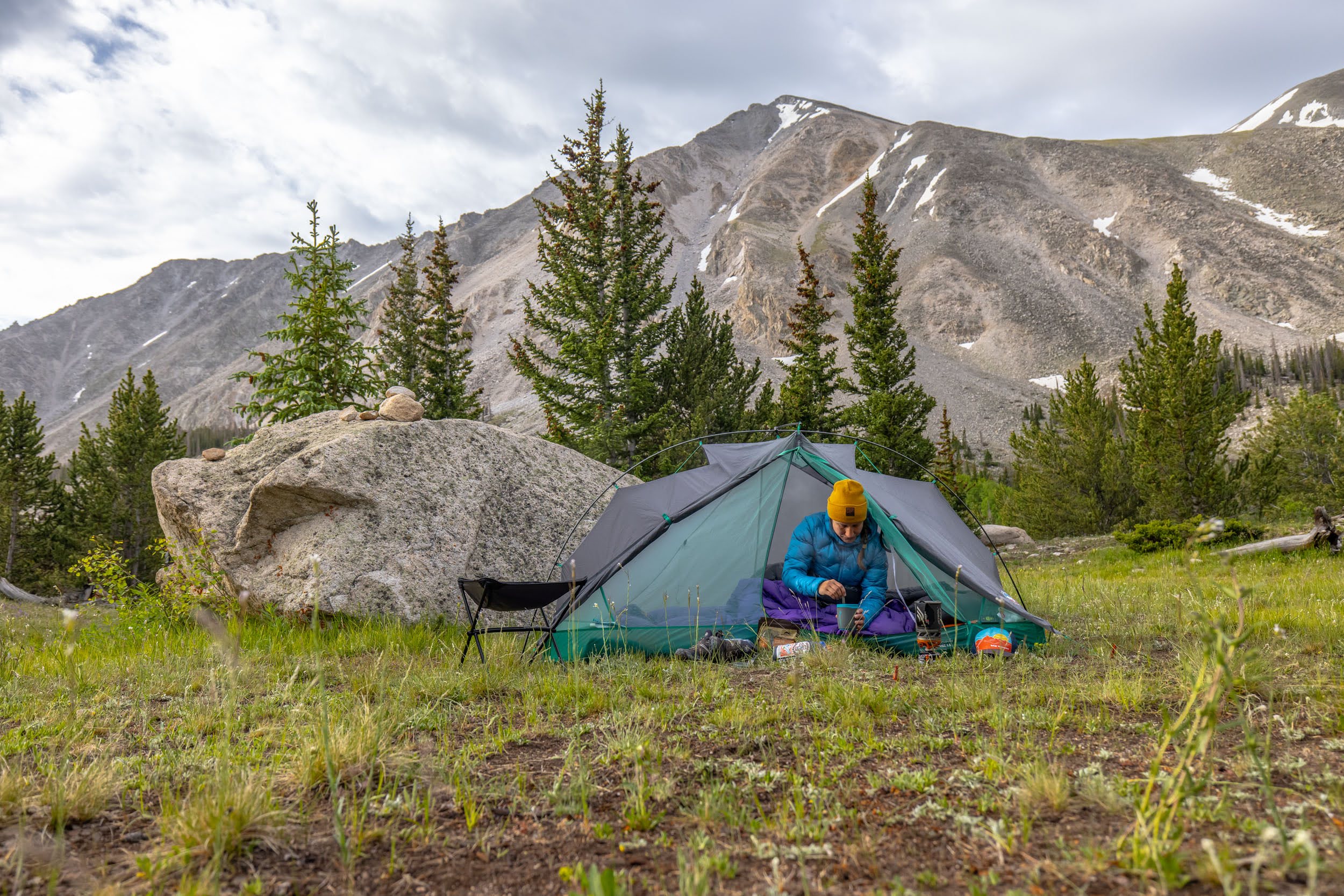
Photo by Noah Wetzel, courtesy of Big Agnes.
Where did the focus on comfort come from?
Bill Gamber: At the time, we were trying to find some really cool backcountry rock climbs. Depending on the weather, we would sometimes just take a sleeping bag, and then we started looking at bivy sacks and how we could go as minimal as possible. But then we started really looking at how we could actually be comfortable. When we really started digging into sleeping pads, we were able to make the insulated air core pad, which was the first real air pad on the market. It was about the size of a water bottle but three and a half inches thick, where at the time Cascade was making Therm-a-Rests that were an inch thick and still bulkier and heavier. We were able to make a lightweight, really comfortable pad.
How have consumer expectations around camping gear shifted over the last 25 years?
Bill Gamber: My kids (I have three kids, ages 28 to 15) have expectations of camping that are much different than mine. We were kind of used to getting cold and wet. My kids expect (comfort), whether it’s ski gear or camping gear, they know what performance means and they have high standards. The entire industry has gone that way. What we’ve been able to do is focus on comfort, meaning carrying lighter gear and still being warm and dry. It used to be that comfort meant heavy. We were using a 30-denier fabric in our tents when we started, and people at Mountain Hardwear came up to us at Outdoor Retailer and said, ‘You’re going to crush it with these tents.’ And we did. We’ve been able to develop lighter, stronger tents over the years.

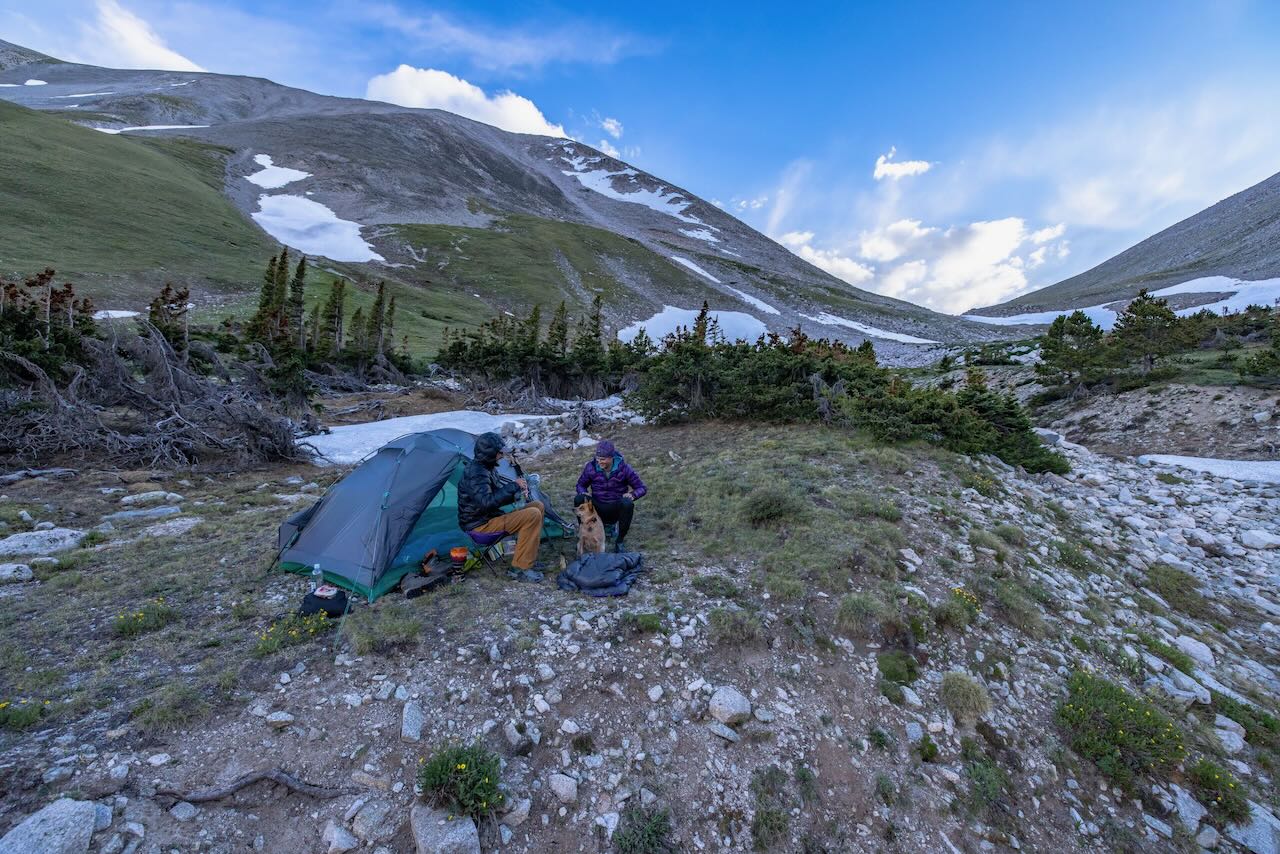
Photo by Noah Wetzel, courtesy of Big Agnes.
Is there a product that best illustrates that evolution?
Bill Gamber: We started off with two tents: the Seedhouse and the Mad House. We were working with Bob Swanson, who started Sierra Designs and became a great friend. He ended up being an employee for a while. He had a tent called the Repeat that he loved but that never quite worked because he was using hubs when nobody was using hubs. I took a bunch of poles off it. It was a great tent, great shape, but overbuilt for a backpacking tent. That evolved into our Seedhouse SL and then our Copper Spur. My favorite tent, no doubt, is our Copper Spur line. I was just in the desert with my 15-year-old and we had a brand-new prototype Copper Spur 3. I just love it.
How has business been since COVID?
Bill Gamber: Business has been a challenge ever since COVID, the last five years. COVID hit, everything shut down for two months, and we thought we were going to have 10 years of inventory. Then all of a sudden things turned on, everybody got outside, and we ran out of inventory by August. All of our retailers were ordering more and forecasting for the next year. The entire outdoor industry over-ordered and over-built. Containers were sitting full of gear. We finally sort of caught up two years later, then we had too much inventory, and then tariffs hit. We don’t have a big corporation or outside funding behind us, so we had to make a lot of hard decisions. We limited spending and we didn’t hire positions we needed. It was hard on all of our employees.
The tariffs are absolutely ridiculous. It’s a global economy. The supply chain is global. We source some fabrics from the U.S. and they go to Asia to be manufactured. We have a new project working with U.S. materials and we’re still going to pay a really high tariff; it makes absolutely no sense. We work in eight different countries, sourcing fabrics from Japan and Korea, manufacturing in Taiwan, China, and Vietnam. We go to the best sources in the world, and most of that happens to be in Southeast Asia. I would say it’s going to be years before a true recovery, financially and economically, for the outdoor industry.
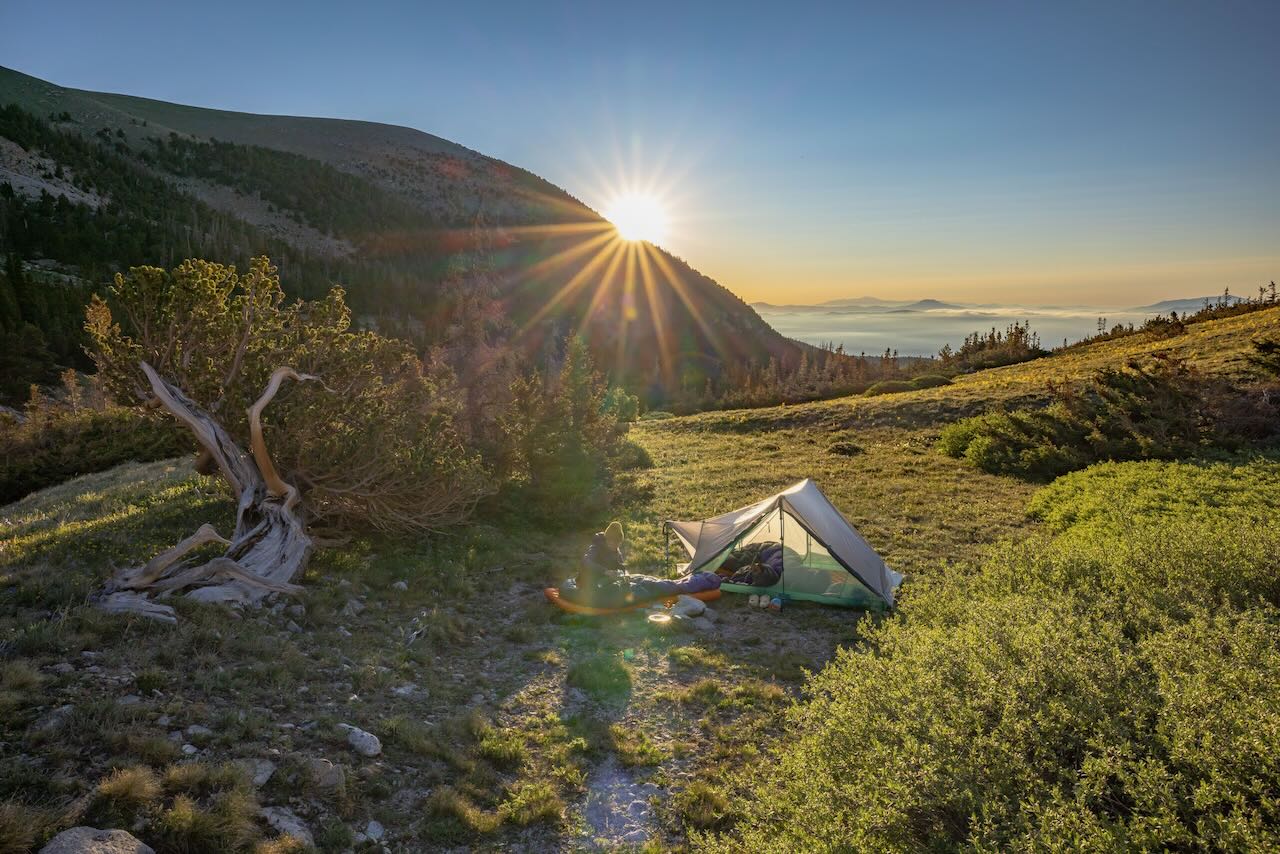
Photo by Noah Wetzel, courtesy of Big Agnes.
Have you been seeking tariff refunds?
Bill Gamber: We have an employee, Adam Eimers, one of our buyers, who had always been making sure we had all our documentation and paperwork in order with importing. When the tariffs started hitting, he just knew how to manage it. We work with the OIA on trade. We felt the Supreme Court was going to call it illegal. We know some of the people involved with the lawsuit that sued the government, like Terry Cycles, a relatively small business that won for everybody. When the refunds turned on, Adam just double- and triple-checked everything and hit go. We don’t have the money yet, so we’ll see.
What does your sales breakdown look like between direct-to-consumer and wholesale?
Bill Gamber: We’re probably about 20% DTC. We have three websites: one for the U.S., one for Canada, and one for German-speaking Europe. We’ve been growing our DTC, but not to the point of jeopardizing our wholesale. We have sales reps in the U.S. and Canada and some agencies internationally. Then we have distributors in places like Scandinavia, Korea, Japan, and France, where we follow specific currencies and languages.
Are there particular markets you’re focused on growing?
Bill Gamber: The U.S. is our main business. Canada has been a really good focus because it’s such an outdoor society. Japan and Korea have been really good markets that we’re definitely looking to grow. Japan is really active. And all of Europe in general. We had a really good distributor in Russia, and when they invaded Ukraine, we had to pull out. That was a real bummer for business, though obviously far worse for the people in Ukraine and Russia.
How is Big Agnes marking its 25th anniversary?
Bill Gamber: We did a 25th anniversary collection. Corey, who does all of our color and soft goods design, did an amazing job. She did the whole print by hand. It has a whole story behind it, kind of like the alpine glow, and the circles represent where Big Agnes Mountain is, which is a wilderness area. It’s a collection of sleeping bags and pads. We talked about bringing back an old original design or doing something old school, but we thought it was more fun to look forward and be fresh and new. We also have our sales meeting in May where we bring in about 50 people from all over, and we’ll have a big party then.
What are you excited about for the rest of the year and beyond?
Bill Gamber: The launch of the VST tent line. That was the baby of Sanders, who is with our team in Vietnam right now. He has his master’s from Stanford, a very engineering-oriented mind, and he’s a through-hiker and ultralight guy. We kind of let him fly on that one. I’m really proud of him and our team on that launch. We’re also working on a new family camping pad for 2027; that’s about all I can tell you. I used one this weekend in the desert and it’s amazing. It’s like sleeping on your home mattress, and it’s pretty easy to use in a car camping setting. The fact that we can work on crazy ultralight tents for the Continental Divide Trail and also make a super comfortable pad for car camping in a state park in Pennsylvania is really fun. The outdoor industry is just awesome. We’re lucky to be in it.”


