
Key Takeaways:
- Three of four specialty retailers report record or near-record summer sales in 2026, with one on pace for a record year.
- Trail running, camping, backcountry ski and consignment are driving growth in different regions.
- Community loyalty and curated small brands are helping retailers outperform national trends.
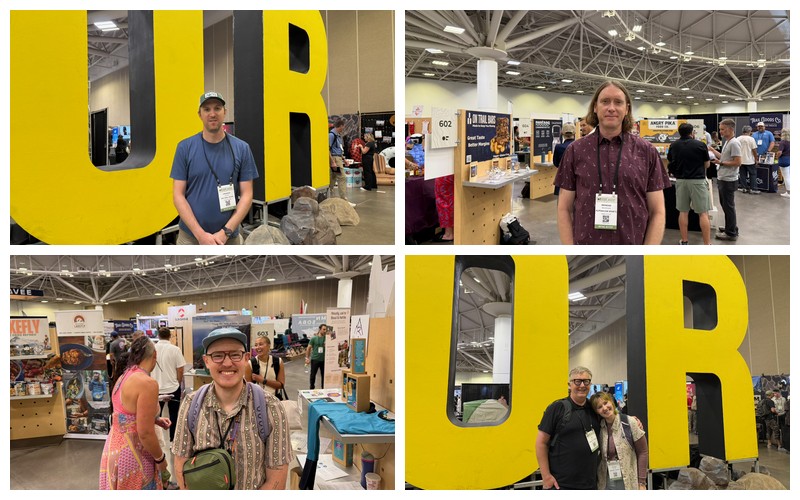
I spent time at Outdoor Retailer in Minneapolis catching up with retailers from around the country to get a ground-level view of how 2026 is going so far. I wanted to know what is actually selling, how consumers are feeling and what is driving performance this year.
Across all four conversations, the throughline was similar. Specialty retailers who lean into their local communities, curate smaller and emerging brands, launch new initiatives and stay close to their core customer are outperforming what the broader retail and economic data would predict for 2026.
The Trail House, Frederick, Maryland
Drennan Hicks, second-generation co-owner of The Trail House, took over the roughly 2,500-square-foot store with his wife in 2020, continuing a business his parents started in the 1980s. The store sits 20 to 30 minutes off the Appalachian Trail and has shifted over the years from a traditional backpacking shop toward more lifestyle clothing and footwear, while still carrying packs, tents, sleeping bags and pads. Hicks said the store is building out its ultralight thru hiking assortment to serve hikers coming off the trail.

“As long as the holidays do what they should, we should have a record year this year,” Hicks said.
Hicks said the spring was particularly strong, led by May, even though the store weathered 10 straight days of rain that month and an unusually hot early July.
“Pretty much everything is either even or up a little bit,” Hicks said. “We’ve seen footwear come back bigger this year. We’ve even seen packs sell pretty well. Clothing is staying steady and growing.”
Tents were the one soft spot, which Hicks attributed to a wave of pandemic era purchases that have not needed replacing yet. He said the store is still looking for a standout new item for the holidays, but has seen early traction with footwear brands including Mount to Coast and Lems.
Hicks credited much of the store’s performance to its location in Frederick’s historic downtown district.
“Frederick is an exploding, super cool little city,” Hicks said. “We’re in a little downtown historic district that’s a destination from D.C. and Baltimore and southern Pennsylvania.”
He said carrying newer, smaller brands remains central to how The Trail House competes.
“It’s a differentiator for us from the big box stores, REI and our competitors,” Hicks said. “We can be a little more agile and get the smaller new stuff. We try to have something new that no one has seen before.”
Around the holidays specifically, he said the goal is to have two or three items in the store that no one else carries. That is why he was on the hunt for new brands at Outdoor Retailer.
Hicks and his wife left corporate jobs in the Washington, D.C. area to take over the business from his parents, a transition he said has been rewarding despite tough early timing.
“It was cool to continue their legacy,” Hicks said. “They had built 37 years of serving the outdoor community in Frederick, and we wanted to continue that.”
Alpenglow Sports, Tahoe City, California
Brendan Madigan, owner of Alpenglow Sports, said the shop is in the middle of a record run.
“The year’s been very strong,” Madigan said. “Summer in particular, we’ve had three record months in a row. We’re tracking on the fourth.”
Winter sales were also strong despite what Madigan described as roughly 60% of average snowfall, which he said still fell in ways that supported the local economy. He said backcountry skiing continues to be a major growth driver for the nearly 50-year-old shop.
“We’re a backcountry shop, and backcountry is booming,” Madigan said.
Trail running footwear has been especially strong this summer, Madigan said, and the shop puts on one of the largest trail and ultra running events in the country, which now accounts for 6% to 8% of annual sales. He credited the store’s heritage, its investment in social media and web sales, and a deliberate strategy of partnering with small, emerging brands over larger legacy names.
“The up-and-coming brands are doing the most exciting things, both from a technology standpoint but also just brand awareness,” Madigan said. “These big brands just can’t move fast enough anymore.”
He said Alpenglow was one of the first shops in the country to carry Norda and one of the first to carry Mount to Coast, and both brands have grown quickly since. He pointed to Raide as another example of the kind of newer, nimble brand reshaping the category industry-wide.
Madigan said roughly 70% of the store’s clientele are visitors or second-home owners, while the remaining 30% of local customers are feeling more economic pressure from gas and food costs. He has pushed brands to do more to support retail partners as direct-to-consumer competition grows.
“If Patagonia gave me 1% of what they ship into my zip code, as a competitor who’s supposed to be a partner, it would change my business,” Madigan said.
Even so, he said the moment feels like a strong one for the category.
“There’s never been a better time to be a backcountry skier or a trail runner,” Madigan said. “If you’re a user, it’s a really fun time right now.”
Sunlight Sports, Cody, Wyoming
Wes Allen, owner of Sunlight Sports, said the year has been strong overall, despite a warmer, drier winter across much of the northern U.S.
“The read on the year so far is quite strong, particularly spring,” Allen said. “This summer has really come back with a bang. We’ve had near-record summer months.”
Camping and camping accessories have been especially strong, he said, a trend he has also heard echoed by other retailers. Apparel and footwear remain solid as well.
Allen said the store’s used and consignment business, launched about 18 months ago starting with ski hardgoods, has become one of the biggest drivers of sales.
“In July, which is one of our biggest months of the year, if you consider our used and consignment as a brand and put it next to our other top brands, it was the number two brand in our store,” Allen said.
Customers can choose cash or store credit for trade ins, with about 90% of the value currently paid out in credit rather than cash.
Sahale, Allen’s daughter and a college student, said the consignment program has also brought in a younger customer base, including high school- and college-age shoppers who previously could only browse hats and ball caps and wait for sales.
“If they’re able to trade in their stuff, get the credit and then come back and see what else has traded in that week, they’re going to find something they like and can use,” Sahale said. “That makes them more excited to go out and come back with new ideas for more outdoor activities.”
Allen said the broader consumer economy looks weaker than his own store’s results would suggest.
“I think that particularly camping being strong is a really good indicator of overall consumer softness,” Allen said. “You look at the big economic indicators, credit card delinquencies, home foreclosures, repossessions on cars. Those are all signals that things aren’t good overall for my local economy and our store.”
Still, he said outdoor recreation is benefiting as shoppers look for accessible ways to spend their time and money.
“People are being more thoughtful about this,” Allen said. “Outdoor is in a good spot.”
Garage Grown Gear, Minneapolis, Minnesota
Lloyd Vogel, founder of Garage Grown Gear, an ecommerce site focused primarily on ultralight backpacking gear from smaller brands, said the business is having a strong year.
“We’re up 20%,” Vogel said. “This month we’re up 25%.”
He credited part of the growth to pulling back from discounting in favor of a full-price model.
“We’re not running discounts as much,” Vogel said. “We haven’t run discounts much to begin with, but we’re just pulling back from that entirely and really just running full-price constantly.”
Vogel said turbulence among larger legacy retailers has created room for smaller, more nimble brands and platforms to gain ground.
“Whenever there is tumultuous energy at the top with big retailers, there is an ability to really reshuffle things on a more grassroots level,” Vogel said. “Where there is uncertainty, there is opportunity, and we are finding a lot of opportunity.”


