
Many outdoor brands grappled with inventory gluts, cautious consumer spending, and frustrations with fluctuating tariffs that sucked up precious resources in 2025.
Despite these headwinds, Gregory Mountain Products reported double-digit revenue growth in its full-year earnings results.
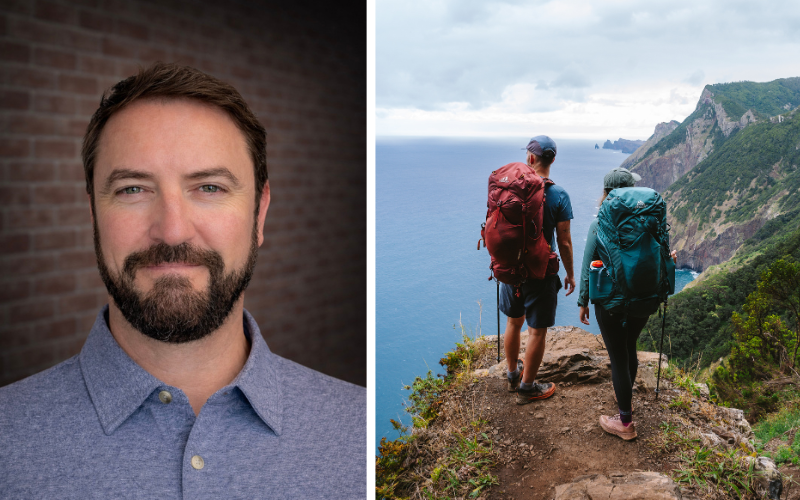
“The Gregory brand has one of the most authentic origin DNA stories. We’ve been around for almost 50 years, and it’s a really exciting time for the brand right now,” said Gregory’s Global GM John Sears in an interview with SESO. “It’s a brand on the move. We’re feeling the momentum right now, and we’re excited about it.”
Sears shared details about how Gregory successfully navigated a volatile market by leaning into:

- Strengthening its global footprint and growing wholesale relationships.
- Targeted product innovation and entering new categories.
- Thoughtful marketing and management.
The Salt Lake City, Utah-based company, which is under parent company Samsonite, reported that global net sales grew 17.9% on a constant currency basis to $85.5 million for full-year 2025. Gregory is part of Samsonite’s “Other” category of brands, which also includes High Sierra, Kamiliant, Lipault and more. The group reported a 3.8% increase in global net sales in 2025, at $271.6 million.
Supporting Wholesale and Retail Partners
While direct-to-consumer sales remain a focus in regions like Asia, wholesale partnerships are the backbone of Gregory’s business in North America and Europe. Sears declined to share the breakdown of DTC to wholesale sales, but the brand concentrated on expanding its specialty retail channels in 2025, Sears said.
To maintain strong relationships with these retailers, Gregory adjusted its promotional calendar. By reducing the frequency of brand-wide discounts, the company aims to protect retailer margins and prevent channel conflict.
“We reduced a MAP window this year, so there’ll be fewer sales from the Gregory brand, which is always something our retailers appreciate, and we listen to their feedback on that,” Sears said. “We want our consumers to be able to find product, we want to meet them where they’re at, (so they are) able to find product wherever they want. That means strong brands partnering with all levels of retailers.”
The brand’s emphasis on physical comfort and load-bearing performance has proven effective on the sales floor of these specialty stores.
“Gregory’s longtime trust in comfort, that story resonates very well with specialty retailers,” Sears added. “As we’re telling a new story, or the same story through a new lens, it has actually really helped turn a lot of heads in specialty and started really resonating.”
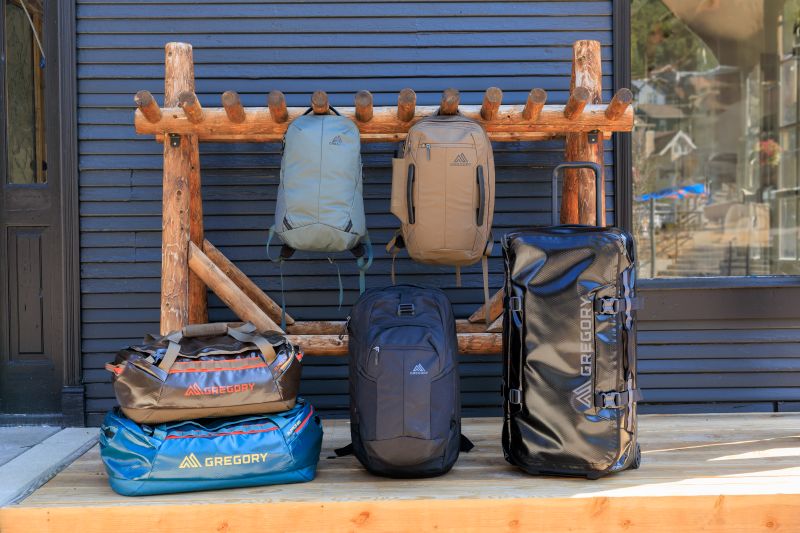
Photo courtesy of Gregory Mountain Products.
Strategic Global Expansion
International markets provided a substantial boost to Gregory’s bottom line. The brand currently operates 31 retail stores in Japan, having opened three new locations in 2025. It also expanded its direct-to-consumer presence in China with four new stores.
The Asian market represents a unique environment for the brand. In Japan, Gregory functions as both a technical outdoor company and a staple of everyday casual lifestyle fashion.
“Our brand in Japan fires on all cylinders, in the sense that we’re very well known as an authentic outdoor brand there, and a very trusted, reliable brand in terms of innovative comfort, fit and performance on the trail,” Sears said. “But for many, many years that has been translated and resonated with the consumers in the everyday lifestyle scene.”
Growth extended to the European market, which operates primarily through wholesale channels. The brand captured market share from competitors by focusing on clear product differentiation.
“Our European business is growing. It’s primarily a wholesale market, so it’s not a direct-to-consumer market like part of Asia is for us,” Sears noted. “But it’s a similar story to North America, where we’re growing half through organic market share growth, and the other half through just new distribution being interested in the Gregory brand.”
Product Innovation and Category Expansion
Gregory’s revenue growth is closely tied to its product strategy, Sears said. The brand introduced new categories while updating its core offerings to meet changing consumer habits. Much of this development happens at the company’s prototype lab in Salt Lake City, where the team iterates on designs based on direct consumer feedback.
In 2024, Gregory launched a gear organization category, which became a primary growth driver through 2025. This line includes products designed to help consumers organize equipment in their vehicles or garages, bridging the gap between trailhead preparation and everyday active lifestyles.
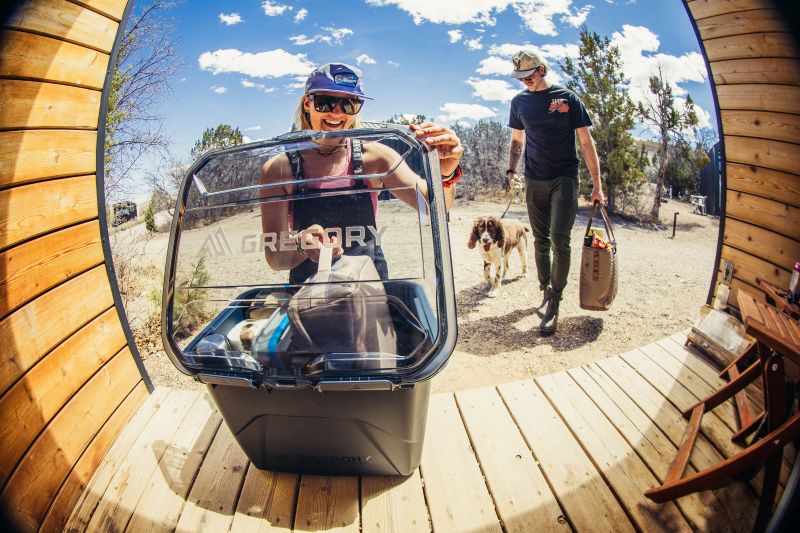
Photo courtesy of Gregory Mountain Products.
At the same time, the brand focused on versatility. Consumers are increasingly looking for products that function well on a mountain trail and during a commute.
“The company was kind of built on this foundation that great bags should be worn, not carried,” Sears explained. “Our job has been to unlock the full potential of the brand while still reinforcing the core. So the way we did that through product is really leaning in on premium ventilated and premium backpacking products, but also in a lot of the more done-in-a-day, quick and short hike products.”
Aesthetic choices also played a role in recent product performance. Sears noted that specific color palettes resonated particularly well with buyers this year. “We’ve seen a lot of those tan and khaki, warm colors resonate quite well,” Sears said. “More deeply saturated colors, confident colors, positive colors, we’ve seen work quite well.”
Navigating Tariffs and Pricing Constraints
Economic pressures, particularly tariffs, have forced outdoor brands to rethink sourcing and pricing structures. Gregory manufactures the majority of its products in the Philippines and Vietnam, with roughly 10% distributed across other parts of Asia. This diversified supply chain provided some insulation from the heaviest China-specific tariffs.
Still, the company had to adjust to maintain product quality without passing excessive costs onto the consumer.
“Listen, there’s no place to hide from the tariffs, so we’re not heavily China sourced, which is good. That’s been helpful,” Sears said. “And we have really good partners overseas too, longstanding, multiple-decade partnerships. Gregory, like anyone else, passed on moderate price increases. But a lot of it was quite well planned from the beginning.”
Redefining Marketing with “Welcome to Gregory”
Gregory is rolling out a new global marketing campaign this spring titled “Welcome to Gregory.” The campaign centers on themes of curiosity, craftsmanship, and intentional experiences.
Rather than relying solely on extreme alpine imagery, the marketing reflects the varied ways consumers actually use the gear, from adventure travel to urban exploration.
“Our consumers are not so different than the people here that build the products,” Sears said. “They have this inherent curiosity, and they’re always trying to learn new things, discover new things, and they’re also masters of their own craft. We realized that we’re really kind of unlocking that relevance that’s always been there for the Gregory brand, and by telling that story and inspiring people to understand we have the same inherent curiosity about the world around us, it is (not) just resonating with existing but also new consumers.”
Integrating Artificial Intelligence
As the broader business world adopts artificial intelligence, outdoor brands are evaluating how the technology fits into their operations. At Gregory, the approach to AI is measured. The company views it as a tool for accelerating creative development and analyzing consumer behavior trends, rather than a replacement for human input.
“The outdoor industry will always depend on authentic experiences and human insight,” Sears observed. “I think the outdoor industry needs to balance all the benefits of it, but you have to be deliberate about making sure that you understand that AI can accelerate creativity, but authenticity still wins. Authenticity is still the strongest currency with our consumers, because that’s what makes outdoor products so fantastic.”


