
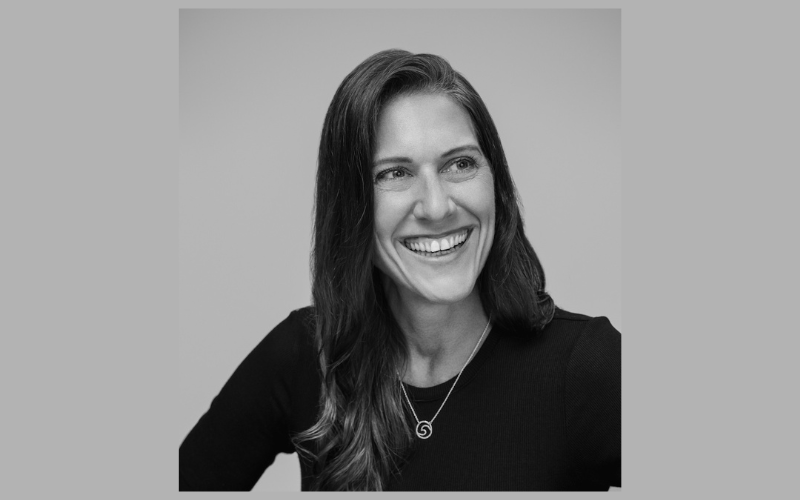
Key Takeaways:
- Wendy Kula became Chief Marketing Officer of Saucony in 2026 after more than a decade at Nike.
- Saucony posted a 31.1% revenue increase in 2025 and helped parent company Wolverine beat Q1 2026 projections across every metric.
- Kula began her career in entertainment marketing at Reebok, working on artist shoe deals with Jay-Z, 50 Cent, Nelly and Pharrell.
Wendy Kula has been Chief Marketing Officer at Saucony for a month, and she’s already deep into three-year creative planning. The day she spoke with Shop Eat Surf Outdoor, Kula was packing for a company-sponsored race in Berlin from her temporary home office on Cape Cod, ahead of a move to Wolverine Worldwide headquarters in Rockford, Mich., the first week of July.
The timing is good. Saucony posted a 31.1% jump in revenue in 2025, and the brand helped Wolverine beat Q1 2026 projections across every metric.
Kula spent more than a decade at Nike, most recently as VP, North American Women’s Brand Marketing, after marketing leadership roles across several fitness apparel and footwear companies. Before boarding her flight to Germany, she talked with SESO about leadership, creative courage and why surfing and ‘90s rom coms are both part of her self-care protocol.

What is the role on your resume that people might be surprised by?
Saucony Chief Marketing Officer Wendy Kula: I spent my formative brand marketing years at Reebok doing entertainment marketing, right at the first intersection of sport, music and entertainment.
I was doing shoe deals with artists like Jay-Z, 50 Cent, Nelly and Pharrell. I wasn’t a hip-hop fan going in, so I became a student of hip-hop. Twenty years later, people who know me as a surfer with sand between her toes are pretty surprised that’s how I spent the early 2000s.
What does accountability look like on your team, if something doesn’t go to plan? How do you handle it?
Wendy Kula: Accountability is both a requirement and a safe space on my team. I want them to take risks and push boundaries, because that’s what great marketers do. Sometimes you swing for the fences and miss. What I tell my team is that if the effort was rooted in sound consumer insight, own it.
I want to create a culture where when you report out, you don’t start with the success, you start with the learnings. I’ve done activations with weak attendance, creative briefs that didn’t land. I take ultimate accountability as the leader, but the one thing I ask in return is transparency. Don’t blindside me. Use me as a partner to clear obstacles and protect the work.
What is the one thing that you know about your customer, or the industry overall, that competitors tend to get wrong?
Wendy Kula: The thing I see consistently misunderstood is the idea that being consumer-led means simply mirroring what consumers already say they want. Consumers don’t always know what they want until they see it. Especially with this younger generation, their identity is fluid and they’re looking for brands to help express who they’re becoming, not just who they are.
The real magic is taking consumers somewhere they didn’t know they wanted to go. That’s the opportunity at Saucony. It’s a brand with serious heritage and tremendous room to deliver something distinct and emotionally resonant, rooted in performance and innovation. You want to be of the trend, not chasing it. The most powerful brands push what’s next.
What is the hardest strategic tradeoff that you’ve had to make in the past two years, or otherwise?
Wendy Kula: Stepping into this role, the hardest immediate tradeoff is how to spend your time during onboarding. I want to move fast and make an impact, but building trust with cross-functional partners is what determines the durability of that impact.
We’re laying out three-year strategic goals right now, so I have to balance getting my hands dirty fast with not getting stuck in strategy rooms instead of building relationships across the organization.
More broadly, the tension every CMO I know talks about is short-term revenue versus long-term brand building. You’re accountable for growth, but distinctive, culturally relevant brands aren’t built overnight.
Figuring out where to push for immediate returns versus where to invest in long-term equity is one of the hardest calls in this job.
How do you decompress and rest? Is that something that you have to fight for within yourself?
Wendy Kula: Resetting for me is always about movement and connection. Surfing is at the center of it. Being in the water, surrounded by a community that exists completely outside the day-to-day pressures of work, brings me a clarity and joy I don’t think I can replicate anywhere else. I’m disciplined about making time for it even when it’s not convenient. I’ll take an extra flight to surf for a day, work the whole way there and back, because the four hours in the water is worth it.
As I’ve gotten older, I’ve learned you can’t operate at the same pace 24/7. Burnout is real. You need to be ambitious and raise your hand, but you also need to take care of yourself, even if that looks like eight hours in the water on a rest day.
What do you know now that you wish someone had told you when you were just starting, on day one?
Wendy Kula: Coming into this role, the culture here was honest from the start, optimistic but clear-eyed about real challenges, and that mattered a lot to me.
Earlier in my career, I wish I’d known there isn’t a blueprint. You have to build your own. I took some lefts to go right, and every time, I thought hard about what I wanted to take from that role into the next one. If you find yourself somewhere that isn’t working, you can architect your own pivot.


