
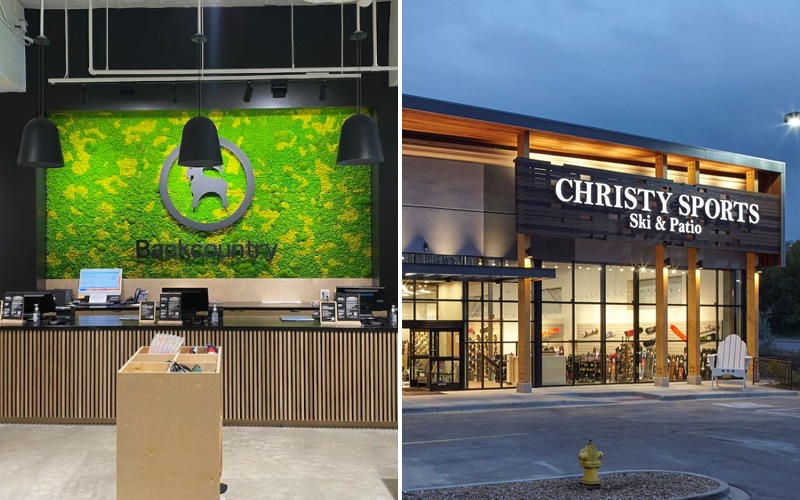
Key Takeaways:
- Christy Sports and its seven brands will keep operating under their own names.
- Backcountry customers will be able to reserve rentals online and pick them up at Christy stores this winter.
- The deal follows one of the toughest Western ski seasons in years, especially in the Rockies.
Backcountry has acquired Christy Sports, the Rocky Mountains’ largest specialty ski and snowboard retailer, the companies announced Wednesday. Financial terms were not disclosed.
The deal puts two significant accounts for ski and snowboard brands under one owner. Backcountry, which calls itself the leading online specialty retailer for outdoor gear and apparel, carries more than 500 brands. Christy Sports operates more than 50 mountain-town stores in Colorado, Utah, Montana, and Washington, along with the region’s largest ski and snowboard rental network.
Christy Sports joins the Backcountry Group, part of CSC Generation‘s family of brands. It will continue operating under its own name and brands, and no store closures are planned.

Seven Brands and a Combined 60-Plus Stores
Founded in 1958 and based in Lakewood, Colo., Christy Sports operates seven brands: Christy Sports, Bootdoctors, The Alpineer, Sturtevant’s, Ski Mart, Leisure Living, and Powder Tools. Its business spans ski and snowboard retail, boot fitting, ski and bike rentals, patio furniture, and summer gear.
Backcountry was founded in Park City, Utah, in 1996 and is headquartered in Cottonwood Heights, Utah. It opened its first store in 2021 and now operates 10. With Christy Sports, the combined footprint grows to more than 60 stores across Colorado, Utah, Montana, Washington state, Illinois, California, and Washington, D.C.
“Christy Sports has spent decades making sure everyone who walks into a shop leaves properly fitted and ready to have a great day on the mountain,” Backcountry President Kevin Lenau said in a statement. “As we expand our retail footprint, we’re doing it by joining a team defined by its commitment to service and to the communities it serves.”
Lindsay Goszulak will serve as CFO of Backcountry Group.
“Christy Sports has been part of these mountain towns for nearly seven decades, and we do not take that trust lightly,” Goszulak said in a statement. “Our shops, our teams and our community involvement stay the same, and now we have a partner that wants to help us do even more for the people who live and ride here.”
Online Reach Meets Mountain-Town Stores
Backcountry brings a growing portfolio of owned labels and its Gearhead Expert program. It also runs the Backcountry Garage brand incubator. Its sister brands include Competitive Cyclist, Velofix, Backcountry Outlet, MotoSport, Steep and Cheap, and BikeTiresDirect.
Christy Sports contributes boot fitters, service technicians, and rental teams. Its shops are often a customer’s first introduction to skiing or snowboarding, according to the companies.
This winter, customers will be able to reserve skis, snowboards, and boots on Backcountry’s website and pick them up at Christy Sports locations. Christy customers will also gain access to Backcountry’s broader online assortment.
SESO has previously covered Backcountry’s acquisitions and spoke with Lenau about M&A, AI, and loyalty.
Parent CSC Generation describes itself as an AI-native multi-brand platform. It says it runs AI agent suites spanning inventory, pricing, customer service, workforce operations, and marketing across the brands it acquires.
A Tough Winter in the Rockies
The deal comes after one of the most challenging winters in more than a decade for the West, particularly in the Rocky Mountains, Christy Sports’ home region.
In February, SESO reported that the snow drought was especially severe in Colorado and Utah, among other Western states. More than 80% of Snow Telemetry stations in the hardest-hit states showed snow water below the 20th percentile.
Preliminary data from the National Ski Areas Association (NSAA) shows U.S. ski areas recorded an estimated 52.6 million snowsports visits in 2025-26, about 9 million fewer than the prior season. National average snowfall was the lowest in more than a decade, and every Western region fell well below average.


