
Key Takeaways:
- Digital storytelling and social media have expanded Patagonia Cardiff’s reach and engaged younger shoppers.
- Consistent in-person events like board swaps and run clubs have built loyalty and driven foot traffic.
- Environmentally-conscious programs serve as a key touchpoint for community engagement and education.
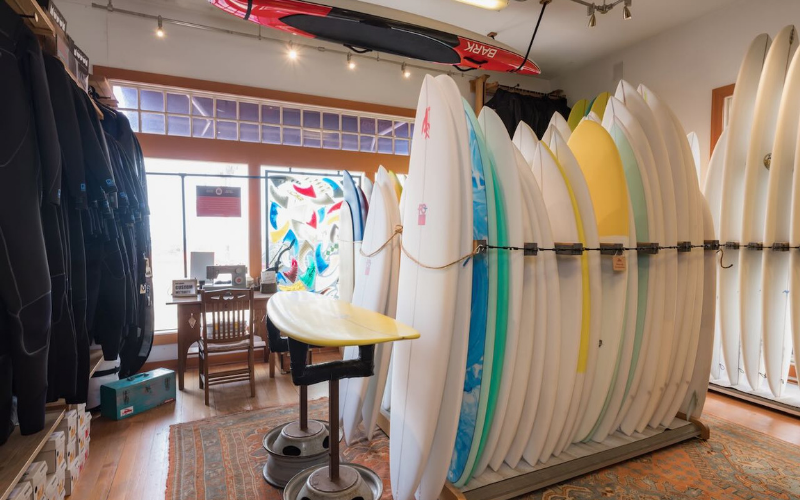
For the past two decades, Patagonia Cardiff has served as a retail hub and community space for the San Diego town’s surf community. The Cardiff location was the first of the company’s surf-focused venues and sits in the heart of a local corridor: it’s across the street from San Elijo State Beach, and is practically paddling distance from much-loved breaks including Swami’s, Pipes, and Turtles.
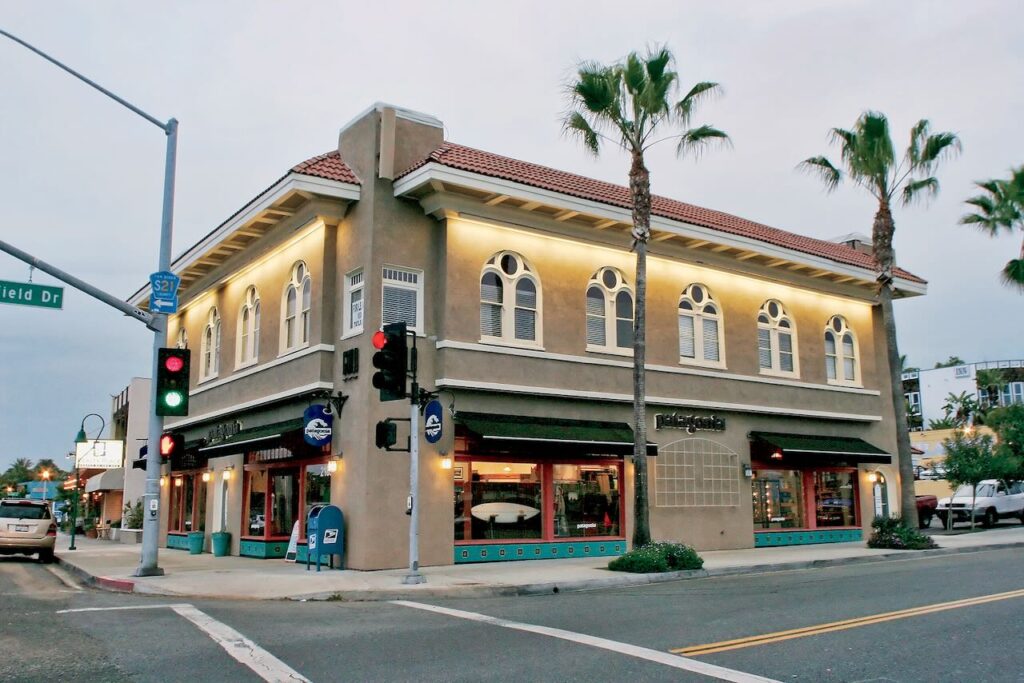
Patagonia’s Cardiff retail store. Courtesy of Patagonia.
Last month, the store celebrated its 20th anniversary and marked the occasion with, what else, a community event, featuring a screenprinting station that donated proceeds to a local environmental nonprofit. In the years since Patagonia opened in Cardiff, it’s grown its local reach with digital storytelling and in-person events like film screenings and board swaps. At the same time, the company has expanded its surf-focused footprint with similar stores from Torquay, Australia, to its home base in Ventura, Calif.
As Patagonia Cardiff turns 20, two of its leaders spoke with SESO about what’s unique about their coastal-focused stores, what’s worked, and how they’re evolving for the next generation of wave riders and ocean enthusiasts.

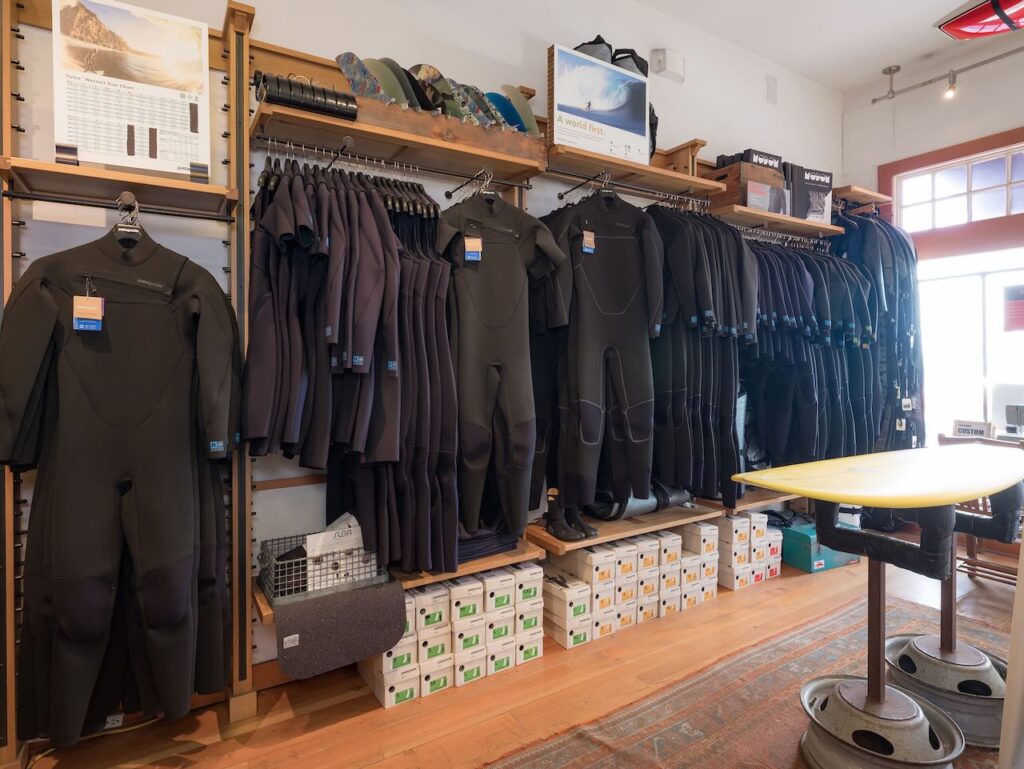
Wetsuits at Patagonia Cardiff-by-the-Sea retail store. Photo credit: © Boone Speed
Patagonia has a diverse retail presence globally, but Cardiff is specifically a surf-focused space. How many dedicated surf stores do you currently operate, and how does the operational strategy of these coastal hubs differ from your standard retail locations?
Danielle Egge, Senior Manager – Retail/Marketplace Experiences: The Cardiff store was actually our first-ever surf-focused retail space. It came together pretty organically when the location became available while we were building up our surf program 20 years ago, and this footprint allowed us to create something more curated and community-specific, rather than carrying the brand’s entire product line.
We’ve always liked to find the right location first and then build the store experience around the culture and needs of that place. Since then, we’ve expanded that surf-focused concept into a handful of other coastal communities around the world, including stores in Chiba (Japan) and Torquay. We also operate a smaller surf store connected to our headquarters in Ventura, which sits alongside our surfboard shaping facility. We will (also) be expanding our Ventura store to have a bigger surf footprint.
And most recently, after moving into a larger retail space in Haleʻiwa (Hawaii), we converted the original location into a dedicated surf-specific shop.
Operationally, these stores function a bit differently from a traditional retail location. They’re much more connected to the local surf community and often serve as gathering spaces as much as retail stores. The assortments are more focused, the storytelling is more regional, and the programming, whether it’s board swaps, film screenings, surf meetups, or nonprofit events, is really tailored to the local culture and needs of that community.
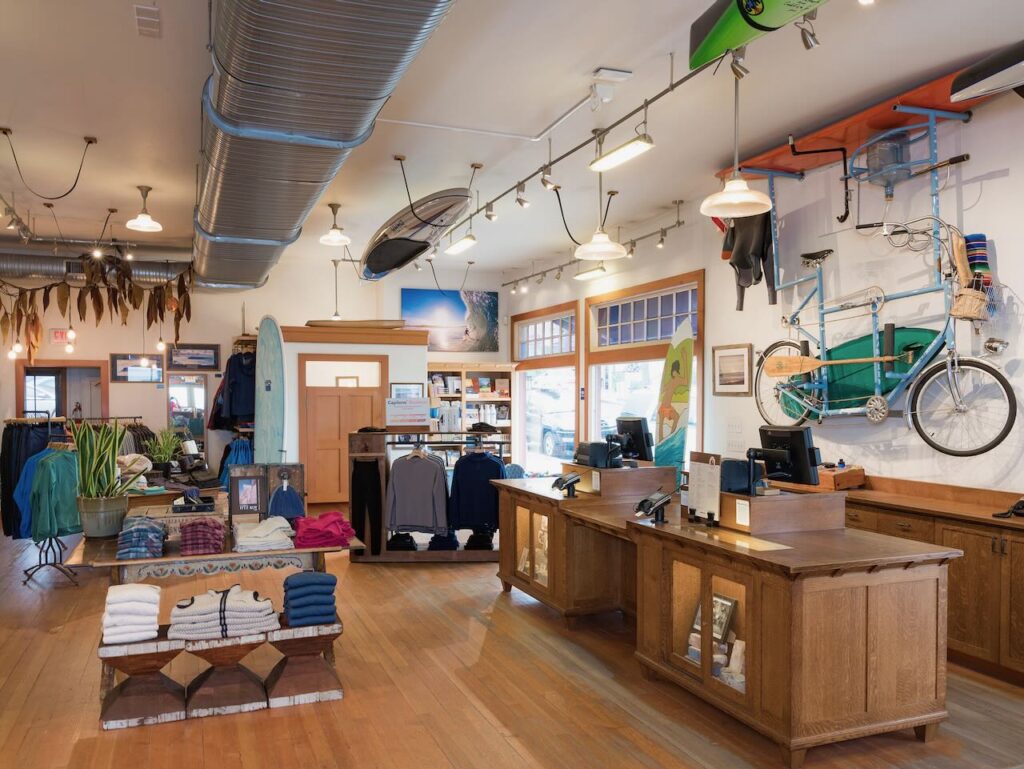
Patagonia Cardiff-by-the-Sea retail store in Encinitas, Calif. Photo credit: © Boone Speed
Beyond your own label, what other surf or lifestyle brands have proven most popular with the Patagonia shoppers in Cardiff?
David Hopkins, Manager, Patagonia Cardiff: We have a unique opportunity to work with a lot of local brands and shapers that naturally align with Patagonia’s values and are genuinely part of the Encinitas community.
Beyond our own Fletcher Chouinard Designs surfboards, we also carry boards from shapers like Jon Wegener, Alex Lopez, and Furrow Surf Craft, especially because there’s an authentic connection between the people behind the boards and the surfers walking into the shop.
So our board racks aren’t just dedicated to our own designs; they’re a shared space that reflects the broader Patagonia and Southern California surf community. That collaboration has also created opportunities for events like our Paipo Happy Hour and Board Swaps, where different groups come together around a shared love of surfing. It helps create a healthy ecosystem for the store, employees, the community, and the shapers and brands involved.
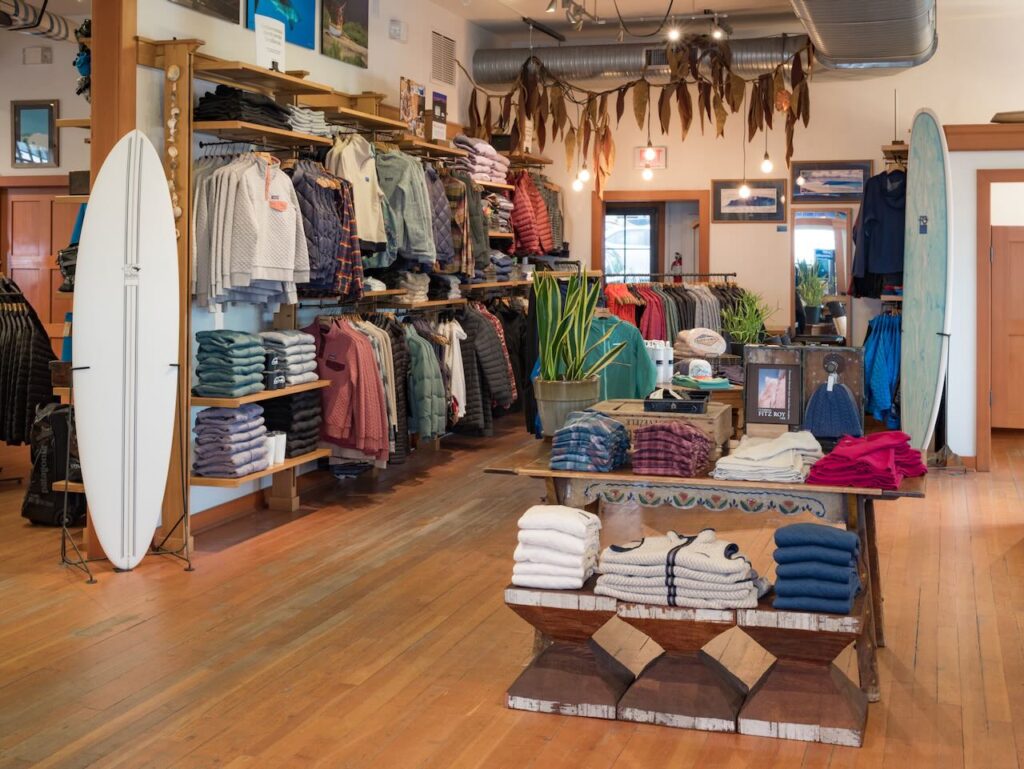
Patagonia Cardiff-by-the-Sea Retail Store, Encinitas, California. Photo credit: © Boone Speed
Over the last two decades, which product categories have proven to be the most resilient or high-growth for the Cardiff community?
David Hopkins: Our insulated jackets, fleece, base layers, boardshorts, and sun protection continue to perform incredibly well because they’ve become timeless Patagonia brand staples. At the same time, we have a strong community of surfers and ocean lovers who come back year after year because they trust the quality and performance of our surf gear.
What’s been exciting is seeing how innovation and responsibly-made products have become major drivers of growth within those same categories. Our neoprene-free natural rubber wetsuits, for example, have evolved into some of the best-performing suits on the market, with a new version launching this fall.
We anticipate selling a lot of those this year. We’re also continuing to integrate materials like NetPlus recycled nylon, made from recycled fishing nets, into boardshorts, outerwear, and other Patagonia staples. In fact, the new wetsuits will incorporate NetPlus into the liner itself, which is a great example of how the product team continues to push both performance and environmental standards forward at the same time.
Another category we’re especially excited about is sun protection. We recently launched a new line of sun-protective tops that use a specialized weave technique designed to maintain UPF protection over time, while also updating the feel and performance of the fabric itself. Products that combine technical performance, longevity, and environmental responsibility have really resonated with the Cardiff community.
The Cardiff store hosts an extensive calendar of film screenings and workshops. Do these gatherings serve primarily as a brand-loyalty tool, or do they drive measurable foot traffic and conversion for your retail operations?
David Hopkins: When we plan events, the questions we ask ourselves are: Does this serve the community? Can it help spotlight a local nonprofit or grassroots effort? And is it aligned with Patagonia’s values? If we can check those boxes, then we know we’re doing our job.
Because of that approach, the events naturally create strong brand loyalty. People know they can come to the store not just to shop, but to connect, whether that’s through film screenings, workshops, board swaps, environmental discussions, or community gatherings.
Over the years, that consistency has built a really loyal group. At the same time, those gatherings absolutely drive meaningful foot traffic and engagement for the store. They bring in a wide mix of people from the local surf and outdoor community, many of whom become long-term customers because they feel genuinely connected to what the brand stands for. For us, the retail side is strongest when it grows organically out of authentic community involvement.
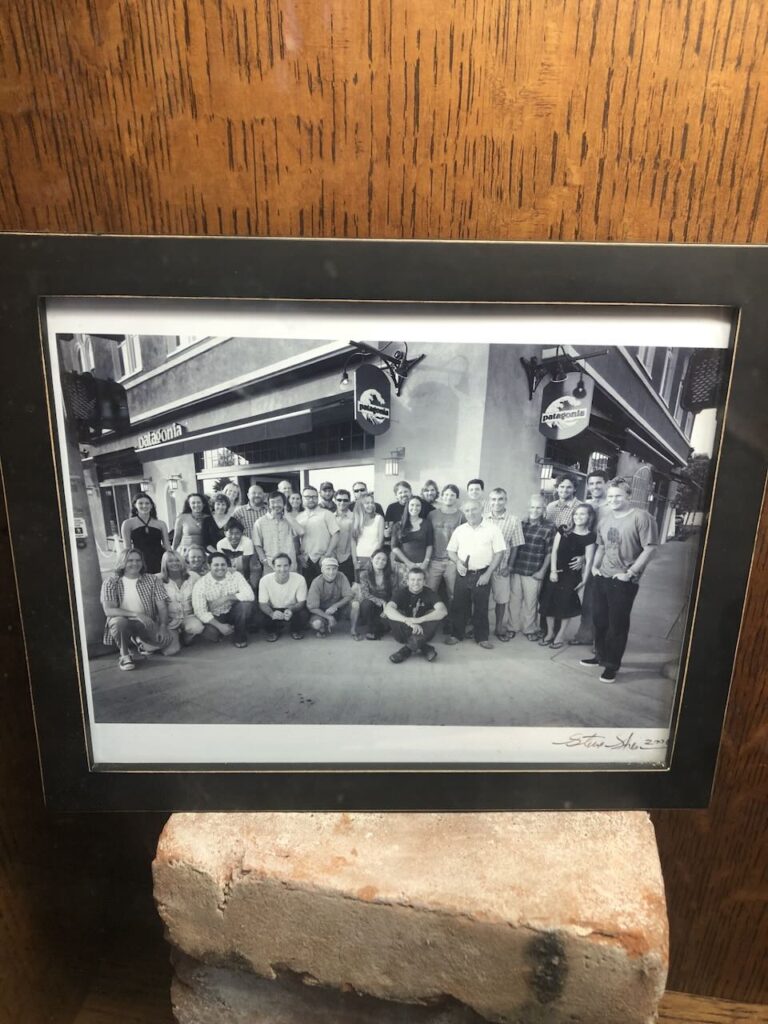
Patagonia Cardiff opening celebration in 2006. Photo credit: Steve Sherman
As you look toward the next two decades in Cardiff, how is Patagonia evolving the in-store experience to stay relevant to a younger, more digitally native surfing generation?
David Hopkins: A big part of staying relevant to a younger, more digitally native generation has been finding ways to market ourselves that still feel authentic to the store and the culture around it. That includes sharing videos and storytelling online that highlight our products, staff, and community, while also creating real-world experiences that bring people together.
Events like our monthly Coastal Run Club meetups and workshops help us create spaces that feel active, welcoming, and connected to the lifestyle people want to be part of. We also continue to deepen our relationships with local nonprofits like Un Mar De Colores, which works to provide ocean and surf access to kids who face systemic barriers to engaging with those spaces. Organizations like Un Mar represent the next generation of surfers, environmental stewards, and community leaders that we want to support.
We see the store not just as a retail space, but as a place where people can feel a sense of belonging and connection to the broader surf community.
Danielle Egge: Programs like Patagonia’s Worn Wear initiative also fit naturally within surf shops because surfing has always had a culture rooted in longevity, repair, and taking care of your gear. The program encourages customers to repair, reuse, and trade in products rather than replace them, helping extend the life cycle of wetsuits, outerwear, and everyday surf essentials.
In a surf-focused retail environment like Cardiff, this creates another touchpoint for community engagement and education around responsible consumption.
Surfers tend to form deep attachments to their gear, so offering repair services and opportunities to recirculate quality products aligns closely with both the values of the surf community and Patagonia’s long-term environmental commitments.


