
Key takeaways:
- REI CEO Mary Beth Laughton challenged the industry to move beyond inspiration and focus on creating access.
- Sessions on culture, style, and sustainability featured leaders from Salomon, Halfdays, Cotopaxi, and Reju.
- The event drew European outdoor industry leaders including ISPO CEO Mike Seaman.
“Real life is getting in the way.”
It was a line that landed with the weight of a challenge, not just a diagnosis. Mary Beth Laughton, CEO of REI Co-op, delivered it during her keynote at Outside Days 2026, held May 28-31 in Denver, and it became the defining theme of the entire event.
Despite 75 percent of Americans acknowledging mental health benefits from time outdoors, 85 percent saying they feel better after it, and 80 percent crediting it with helping them unplug from screens, REI-supported research shows that 45 percent of Americans still spend less than two hours outside per week. The gap between knowing and doing, Laughton argued, is the industry’s most urgent problem and its greatest opportunity.

“We have to make getting outside easier,” she said. “Make it easy. Make it essential.” She didn’t stop at inspiration. “Leadership needs to shift. It can’t just be about inspiring and equipping. It must be about creating access and closing the gaps.”
That challenge set the tone for everything that followed.
Denver as the Industry’s Center of Gravity
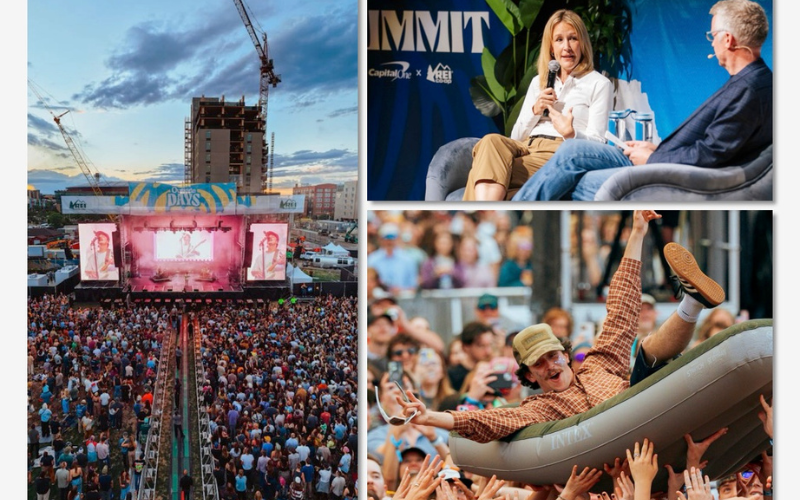
Outside Days 2026 brought together outdoor consumers, brands, retailers, athletes, and policymakers in a format that was itself an answer to Laughton’s call. By combining the Outside Summit and Outside Festival into a single, multi-day gathering at Auraria Campus in downtown Denver, the event connected the business of the outdoors with the people who actually live it.
Colorado Governor Jared Polis made clear how much the state has at stake. “One in eight have jobs in outdoor,” he said. “Colorado will do everything it can to support outdoor recreation. I’m proud to support and elevate this industry.”
Connor Hall, Director of the Colorado Outdoor Recreation Industry Office, framed the event’s broader purpose in the same spirit, calling Outside Days a “true gathering place for the outdoor industry,” one uniquely positioned to address public lands, participation barriers, health outcomes, and economic impact under one roof.
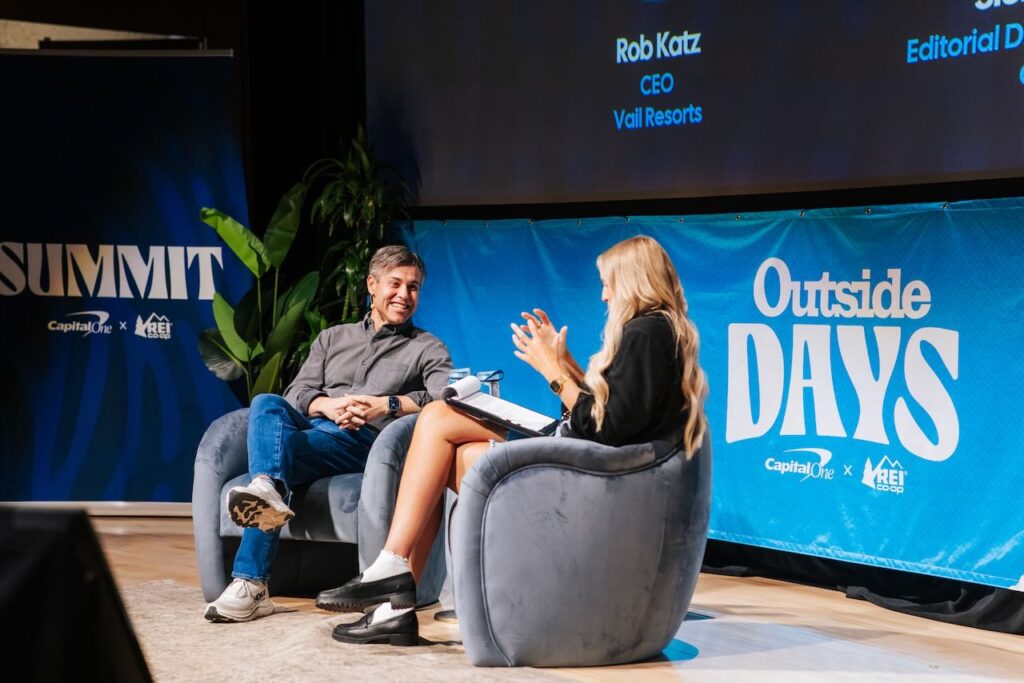
Vail Resorts CEO Rob Katz. Photo by Darren Miller, courtesy of Outside Days.
Culture as the Entry Point
If access is the mission, culture is the vehicle. Former Colorado Poet Laureate Bobby LeFebre opened the Outside Summit to a standing ovation with a poem written specifically for the event. One line resonated throughout the gathering: “We have mistaken convenience for living.” His reminder that “out there the soul stands up straighter” felt less like poetry and more like a strategic brief for the entire industry.
That collision of culture and commerce took center stage in one of the summit’s most popular sessions, moderated by Kevin Sintumuang, Editorial Director of Outside Magazine, with Steve Doolan, President and GM Americas at Salomon; Ariana Ferwerda, co-founder and CEO of Halfdays; Lindsay Shumlas, CEO of Cotopaxi; and Clint Pumphrey, Curator of the Outdoor Recreation Archive at Utah State University.
“Style is the front door to the outdoors,” Sintumuang said, and the panel built a credible case for why that matters now more than ever. Pumphrey grounded the conversation historically: “The outdoor industry has been colliding with style, fashion and music for 100 years. Before it was fashionable, now it is fashion.”
Doolan pointed to the Salomon XT-6 as proof that technical credibility and cultural relevance are not mutually exclusive, but warned against chasing trend for its own sake.
“Consumers will come because of authenticity,” he said. “The second brands start to chase revenue; you are in trouble.” Ferwerda focused the conversation on expanding access to mountain sports, particularly for women entering the category for the first time.
Industry Momentum on the Ground
For many attendees, the value of Outside Days was as much about connection and community as commerce.
“Outside Days is as good for business as it is for the soul,” said Jenna Celmer, President and Chief Community Officer of Basecamp Outdoor. “Having everyone you want to see in one vibrant place across both scheduled events and organic meetups creates incredible momentum.”
For newer and emerging brands, the event offered something harder to manufacture: a sense of legitimacy and belonging within an industry that can be difficult to break into. “Seeing the evolution and growth of Outside Days has been phenomenal,” said Sasha DiGiulian, founder and CEO of SEND Bars.
Mike Bednaz of Minus33 echoed the sentiment. “Our brand was born to keep people comfortable and safe outside, so attending Outside Days was a no-brainer,” Bednaz said. “It was an amazing opportunity to connect with people that love doing exactly what we like to do, play outside.”
Lindsay Shumlas, CEO of Cotopaxi, connected those threads directly back to the access themes that ran through the entire event. “Outside Days is exactly the kind of gathering we believe in. People coming together around a shared love of the outdoors, across backgrounds and experience levels. Being part of it this year felt right for Cotopaxi. Our mission has always been to help more people experience the outdoors by making adventure feel more accessible, approachable and welcoming. Events like this remind us why that work matters and how powerful it can be when people connect through a shared appreciation for the places we all love.”
Kent Ebersole, President of the Outdoor Industry Association, captured the longer-term significance with clarity.
“Participation doesn’t always start on a trail or in a gear shop,” he said. “It usually starts with a mindset. Outside Days shares that mindset with people who’ve never thought of themselves as outdoor consumers, planting the seed for future participation. That matters.”
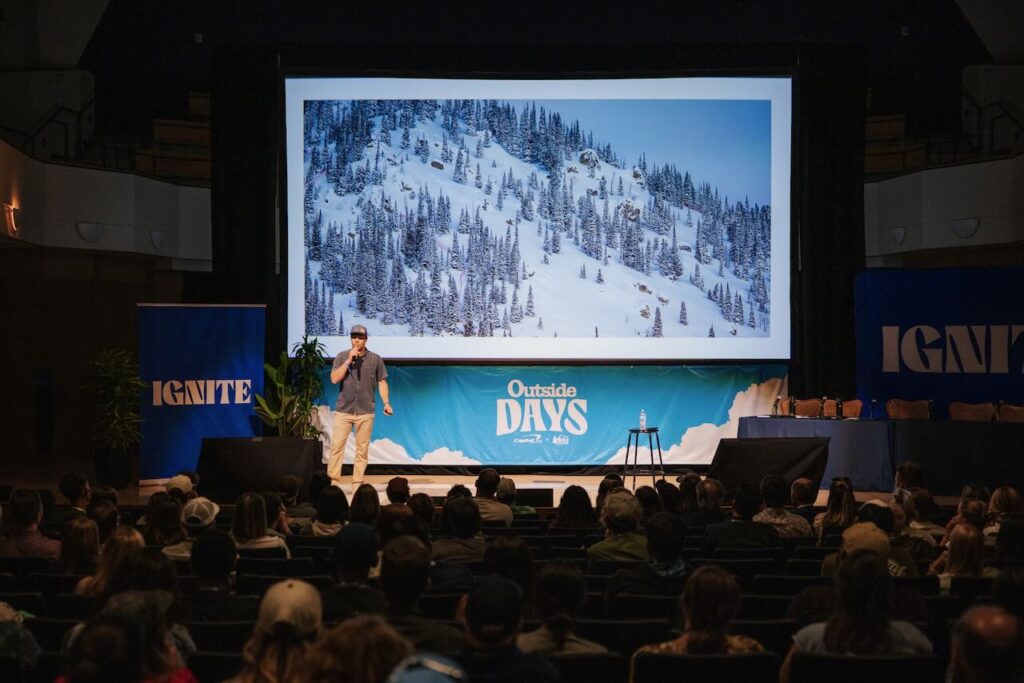
Snowboarder Travis Rice presented at Outside Days. Photo by Shafik Kadi, courtesy of Outside Days.
The Festival Experience
On the consumer side, Outside Days delivered a festival experience that made a convincing argument for why outdoor culture belongs in the middle of a city. The Ideas Stage featured a lineup as wide as the industry itself: Alex Honnold, Jessie Diggins, José Andrés, Alexi Pappas, Travis Rice, Chris Benchetler, Jim Morrison, Rebecca Rusch, and Scott Jurek, among others, brought adventure storytelling, endurance, exploration, and the human relationship with wild places to life through live podcast tapings, athlete conversations, and sessions on creativity, risk, and resilience.
The film program anchored the evenings with a curated slate of outdoor documentaries and shorts. Each screening included filmmaker and athlete Q&A sessions that turned viewings into conversations.
Music gave the festival its pulse, with headliners Death Cab for Cutie, My Morning Jacket, Cage the Elephant, The Flaming Lips, Japanese Breakfast, Goth Babe, Tash Sultana, and Dawes drawing from indie, alternative, and crossover audiences, a lineup that continued to blur the line between outdoor culture and mainstream music in ways that felt intentional and earned.
Sustainability Takes Center Stage
Sustainability was not a side conversation at Outside Days 2026; it was woven into the fabric of both the summit and the festival grounds. The session “What It Takes to Build Circular Systems That Scale” brought together Patrik Frisk, CEO of Reju; Peter Whitcomb, CEO of Tersus Solutions; and Susan Viscon of REI, moderated by Mary-Frances Heck of Outside.
Frisk opened with a number that stopped the room: one billion barrels of oil are used every year just to make polyester. “The waste is a catalyst for me,” he said. “We need to get organized. We need to become more circular.”
Reju reinforced that message beyond the stage, bringing a life-sized elephant constructed from textile donations collected through Goodwill of Colorado, a visceral reminder of the scale of the problem.
Whitcomb came at it from the consumer side with characteristic directness. “The best thing consumers can do is buy nothing,” he said, drawing laughs before laying out a clear hierarchy: buy secondhand, buy fewer things, buy better things.
On the festival grounds, Minus33 Merino Wool Clothing put sustainability into practice with a Made in USA sock giveaway tied to a meaningful program expansion. The brand recently announced it is extending its Search and Rescue initiative to accept merino wool base layers from any brand. Those pieces are inspected, cleaned, repaired if needed, and turned into warming kits for Search and Rescue teams across the country, giving discarded gear not just a second life, but a potentially lifesaving one.
The gathering also drew European guests, including Mike Seaman, CEO of ISPO, who traveled from London specifically to explore the growing alignment between U.S. and European outdoor markets ahead of ISPO’s November event in Amsterdam.
“Outside Days was a fantastic opportunity for us to meet brands and talk about the synergies that exist between the U.S. and European outdoor markets,” he said. “Congratulations to Robin and the team for creating a truly world-class event.”
What It All Points To
Outside Days 2026 made one thing unmistakably clear: growth in the U.S. outdoor industry is no longer driven by product innovation alone. The brands and organizations gaining the most ground are those actively working to expand who gets access to the outdoors and making that access feel natural. The gap between wanting to go outside and getting there remains stubbornly wide. But Denver was full of people determined to close it.
“Denver has proven itself as the natural home for this movement, a place where the outdoor industry doesn’t just gather, but where we actively shape what comes next,” said Robin Thurston, CEO of Outside Interactive Inc. “What started as a bold vision has evolved into a platform where entrepreneurs pitch game-changing ideas, where policy makers and brand leaders forge new partnerships, and where thousands of people come together to celebrate why we do this work. The energy is undeniable, and it’s only growing.”
Editor’s note: Chris Goddard, the author of this article, is the president of CGPR, a division of Off Madison Ave.


